Healthy Canned Salmon Recipes (High-Protein & Easy Meals) 2026
Canned salmon recipes deserve a permanent spot in your weekly meal rotation, and I’m about to show you exactly why. This pantry staple transforms into restaurant-quality dishes in minutes, delivering exceptional nutrition without the premium price tag of fresh fish. Wild caught salmon packed in cans retains all the omega-3 fatty acids, protein, and essential nutrients your body craves, making it one of the smartest shortcuts for health-conscious home cooks.
The biggest mistake I see beginners make? Treating canned salmon like it needs elaborate preparation or fancy ingredients to taste good. Nothing could be further from the truth. This fish comes pre-cooked and ready to shine with minimal effort. The real magic happens when you drain it properly, remove any visible bones (or leave them for extra calcium), and pair it with simple, complementary flavors that enhance rather than mask its natural taste.
These recipes work beautifully for busy professionals, parents managing tight schedules, and anyone building muscle or maintaining a healthy weight. Each serving delivers 20-25 grams of complete protein, making it perfect for post-workout meals or satisfying lunches that keep you full for hours. You’ll discover how to season salmon perfectly, balance textures, and create meals that taste like you spent far more time than you actually did. Whether you’re meal prepping for the week or need dinner on the table in 20 minutes, these high-protein salmon meals deliver every single time.
Ingredients List
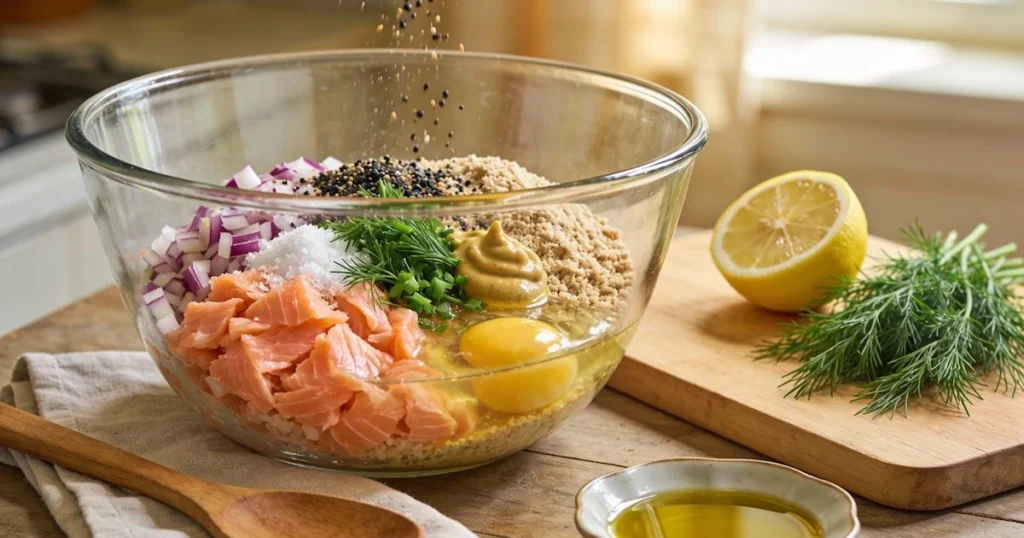
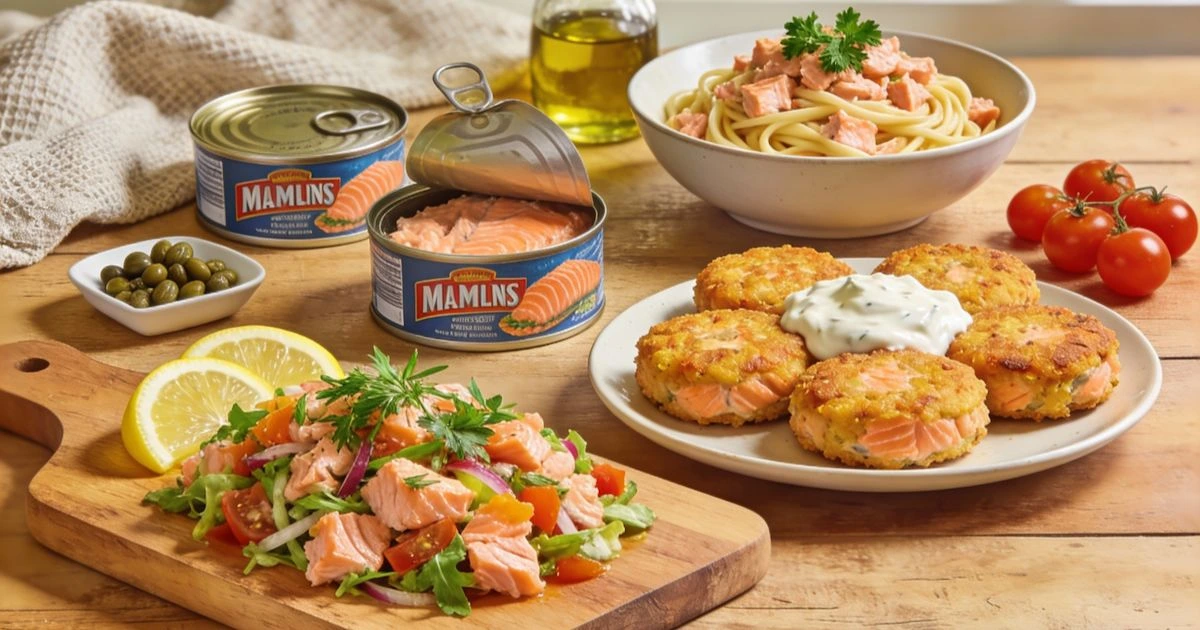
For Basic Salmon Patties
- Two 5-ounce cans of wild caught salmon, drained
- One large egg, beaten until smooth
- Half cup whole wheat breadcrumbs (or almond flour for low-carb)
- Quarter cup finely diced red onion
- Two tablespoons fresh lemon juice
- One tablespoon Dijon mustard
- Fresh dill, chopped (about two tablespoons)
- Sea salt and cracked black pepper
- Two tablespoons olive oil for pan-frying
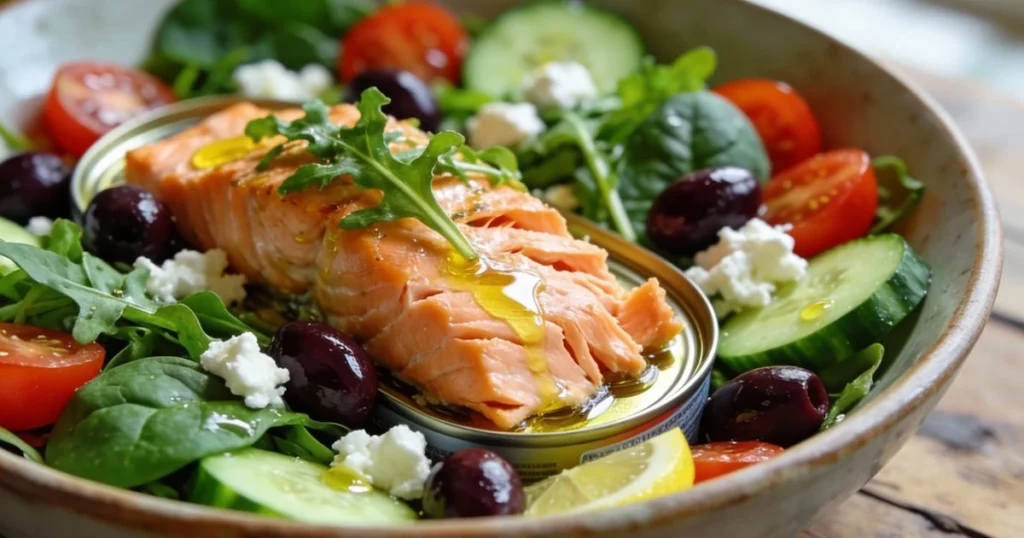
For Mediterranean Salmon Bowl
- One 5-ounce can of salmon, flaked
- Two cups mixed greens (arugula and spinach work beautifully)
- Cherry tomatoes, halved
- Cucumber slices, crisp and cold
- Kalamata olives, pitted
- Crumbled feta cheese
- Extra virgin olive oil and lemon dressing
For Creamy Salmon Pasta
- Two cans of salmon, bones removed
- Eight ounces whole grain pasta
- One cup Greek yogurt (substitute for heavy cream)
- Fresh garlic, minced
- Baby spinach leaves
- Sun-dried tomatoes, chopped
- Parmesan cheese, freshly grated
Timing
Salmon Patties:
- Prep time: 10 minutes
- Cook time: 8 minutes
- Total time: 18 minutes
Mediterranean Bowl:
- Prep time: 12 minutes
- No cooking required
- Total time: 12 minutes — faster than ordering takeout
Creamy Pasta:
- Prep time: 8 minutes
- Cook time: 15 minutes
- Total time: 23 minutes
These healthy canned salmon recipes prove you don’t need hours to create nutritious, satisfying meals your whole family will love.
Step-by-Step Instructions
Making Perfect Salmon Patties
Step 1: Prepare the Salmon Base
Drain the canned salmon thoroughly and transfer it to a large mixing bowl. Gently separate the fish into evenly sized flakes with a fork. Check for any stray bones or skin, though these are safe to eat and packed with calcium.
Step 2: Combine Wet Ingredients
Add the beaten egg, Dijon mustard, and fresh lemon juice to the bowl. The mustard adds tangy depth while the lemon brightens every bite. Mix gently until the ingredients bind together without becoming mushy.
Step 3: Add Texture and Flavor
Fold in the breadcrumbs, diced onion, fresh dill, salt, and pepper. The breadcrumbs absorb moisture and help the patties hold their shape during cooking. Let the mixture rest for five minutes to allow the breadcrumbs to hydrate fully.
Step 4: Shape and Cook
Form the mixture into four equal patties, about half an inch thick. Add olive oil to a large skillet and heat it over medium. Once the oil shimmers, add the patties. Cook for four minutes per side until golden brown and crispy. The exterior should crunch beautifully while the interior stays tender.
Building the Mediterranean Bowl
Step 1: Prepare Your Base
Arrange fresh mixed greens in a wide, shallow bowl. The greens provide a nutrient-dense foundation that complements the rich salmon perfectly.
Step 2: Layer Your Ingredients
Flake the salmon over the greens. Arrange cherry tomatoes, cucumber slices, and Kalamata olives in sections around the bowl. This creates visual appeal and allows you to get different flavor combinations in each bite.
Step 3: Finish and Dress
Crumble feta cheese over everything.Finish with a liberal drizzle of olive oil and fresh lemon juice.Toss lightly just before eating to keep the greens crisp.
Creating Creamy Salmon Pasta
Step 1: Cook the Pasta
Boil pasta according to package directions until al dente.Before draining, save one cup of the pasta water. This starchy water helps create a silky sauce that clings to every strand.
Step 2: Build the Sauce
In the same pot, combine Greek yogurt, minced garlic, and a splash of reserved pasta water. Stir over low heat until smooth and warm. The yogurt provides creaminess with far fewer calories than traditional cream sauces.
Step 3: Combine Everything
Add the cooked pasta, flaked salmon, baby spinach, and sun-dried tomatoes to the sauce. Toss gently until the spinach wilts and everything is evenly coated.Stir in more pasta water if necessary to achieve the desired texture.
Step 4: Finish Strong
Remove from the heat, then stir in the grated Parmesan.The residual heat melts the cheese perfectly. Season with salt and pepper to taste.
Nutritional Information
Salmon Patties (per serving, makes 4)
- Calories: 220
- Protein: 24g
- Total Fat: 10g
- Saturated Fat: 2g
- Carbohydrates: 12g
- Fiber: 2g
- Omega-3 Fatty Acids: 1,200mg
Mediterranean Bowl (per serving)
- Calories: 285
- Protein: 22g
- Total Fat: 16g
- Carbohydrates: 14g
- Fiber: 4g
Creamy Pasta (per serving, makes 4)
- Calories: 340
- Protein: 26g
- Total Fat: 9g
- Carbohydrates: 42g
- Fiber: 6g
All recipes deliver exceptional protein content, making them ideal for muscle maintenance, weight management, and sustained energy throughout your day.
Healthier Alternatives
Lower Calorie Options: Replace breadcrumbs with crushed cauliflower for salmon patties. Use zucchini noodles instead of pasta to cut carbs by 75%. Skip the feta cheese and use nutritional yeast for a dairy-free alternative that still provides savory depth.
Higher Protein Boost: Add a scoop of unflavored protein powder to the pasta sauce. Include an extra can of salmon in any recipe. Top bowls with hard-boiled eggs or grilled chicken for additional protein.
Lower Fat Modifications: Use cooking spray instead of olive oil when pan-frying patties. Choose fat-free Greek yogurt for the pasta sauce. Reduce cheese quantities by half and amplify flavor with fresh herbs like basil, cilantro, or parsley instead.
Whole Food Swaps: Replace breadcrumbs with rolled oats ground in a food processor. Use mashed sweet potato to bind salmon patties instead of egg. Swap regular pasta for chickpea or lentil pasta to increase protein and fiber simultaneously.
Serving Suggestions
Serve salmon patties over a bed of mixed greens with tzatziki sauce and pickled red onions. The cool, creamy sauce contrasts beautifully with the warm, crispy patties. Slide them into whole wheat buns with avocado slices and tomato for satisfying sandwiches.
Pair the Mediterranean bowl with warm pita bread and hummus. Sprinkle in roasted chickpeas for added texture and plant protein. Serve alongside a simple tomato soup for a complete, balanced meal.
Present the creamy pasta in shallow bowls topped with fresh basil and red pepper flakes. Serve with a side of roasted broccoli or a simple arugula salad dressed with balsamic vinegar. The bitter greens cut through the richness perfectly.
Transform any of these recipes into meal prep by portioning them into glass containers. They reheat beautifully and taste even better the next day as flavors meld together.
Common Mistakes to Avoid
Mistake 1: Not Draining the Salmon Properly Excess liquid makes patties fall apart and dilutes flavor. Press the salmon gently with paper towels after draining to remove all moisture.
Mistake 2: Overcooking the Patties Since canned salmon is already cooked, you only need to brown the exterior and heat through. Overcooking creates dry, tough patties. Four minutes per side at medium heat is perfect.
Mistake 3: Using Too Much Filler Adding excessive breadcrumbs or binders overwhelms the salmon flavor. The fish should be the star. Use just enough binder to hold things together.
Mistake 4: Skipping the Rest Time Letting the mixture rest before cooking allows ingredients to bind properly. This prevents patties from crumbling when you flip them.
Mistake 5: Cooking at Too High Heat High heat burns the exterior before the inside warms through. Medium heat creates the perfect golden crust while ensuring even heating.
Storing Tips
Refrigeration: Store cooked salmon patties in an airtight container for up to four days. Separate the patties with parchment paper to prevent them from sticking together.The Mediterranean bowl stays fresh for two days when kept in separate containers with dressing on the side.
Reheating: Reheat patties in a 350°F oven for ten minutes to restore crispiness. Microwaving makes them soggy. Heat pasta gently on the stovetop with a splash of water or broth to prevent drying out. Add fresh spinach just before serving for the best texture.
Freezing: Freeze uncooked patties on a baking sheet until solid, then transfer to freezer bags. They keep for three months. Cook from frozen, adding two extra minutes per side. The creamy pasta doesn’t freeze well due to the yogurt-based sauce.
Make-Ahead Strategy: Prepare the salmon mixture up to 24 hours ahead and refrigerate until ready to cook. Chop all vegetables and store them separately. This cuts dinner prep time to under ten minutes.
Conclusion
These high-protein salmon meals prove that eating healthy doesn’t require complicated recipes or expensive ingredients. Canned salmon delivers exceptional nutrition, versatility, and convenience that fresh fish simply can’t match. Try these recipes this week and discover how easy it is to create restaurant-quality meals at home. Leave a comment below with your favorite variation, and subscribe for more practical, protein-packed recipes that fit your busy lifestyle.
FAQs
Can I use fresh salmon instead of canned for these recipes? Yes, cook fresh salmon until it reaches a safe internal temperature of 145°F, then flake it before using in these recipes. Keep in mind that fresh salmon has a different texture and won’t bind as easily in patties.
Is canned salmon as healthy as fresh salmon? Absolutely. Canned salmon retains all the omega-3 fatty acids, protein, and nutrients found in fresh fish. Wild caught salmon in cans often includes bones, providing extra calcium most people need.
How can I remove the fishy smell from canned salmon? Rinse the drained salmon under cold water and pat it dry thoroughly. Adding fresh lemon juice, herbs like dill or parsley, and aromatics like garlic effectively masks any strong fish odors.
What’s the difference between pink and red canned salmon? Red salmon (sockeye) has a firmer texture, richer flavor, and higher fat content. Pink salmon is milder, flakier, and more budget-friendly. Both work excellently in these recipes.
Can I make salmon patties without eggs? Yes, use mashed avocado, flax eggs (one tablespoon ground flaxseed mixed with three tablespoons water), or aquafaba as binding alternatives. Each creates slightly different textures but works effectively.How do I know if canned salmon has gone bad after opening? Fresh canned salmon should smell mildly oceanic, not sour or ammonia-like. Check for discoloration or slimy texture. When stored properly in the refrigerator, opened canned salmon lasts three to four days.