Chicken Adobo Recipe – Easy Filipino Comfort Food
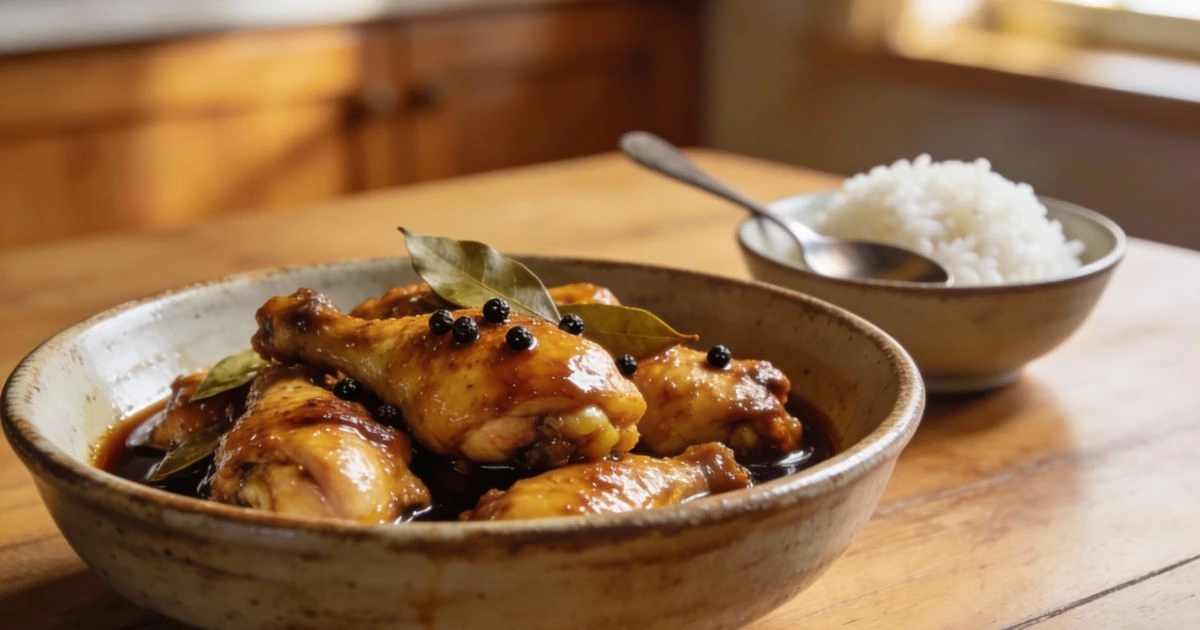
This traditional chicken adobo recipe lets you enjoy the classic Filipino comfort dish at home using only a few basic ingredients. You’ll master the traditional balance of soy sauce, vinegar, and garlic that defines this classic dish. The recipe works perfectly for busy weeknights while delivering restaurant-quality flavors. Whether you’re new to Filipino cooking or craving nostalgic homemade taste, this easy adobo chicken satisfies completely.
Why You’ll Love This Recipe
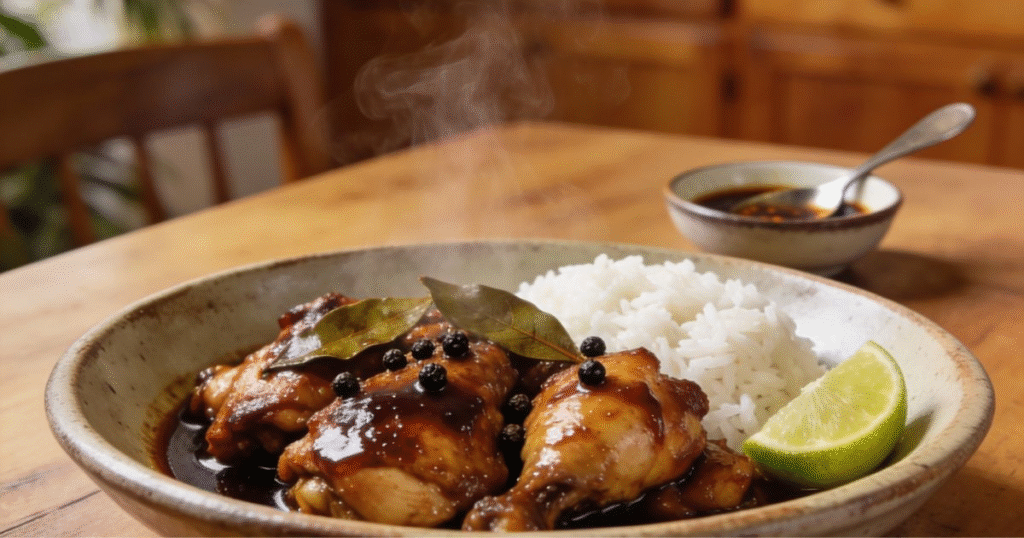
This Filipino chicken adobo recipe uses only 8 basic ingredients you probably have in your pantry. No special trips to specialty stores required.
The one-pot cooking method creates tender, flavorful chicken with minimal cleanup. You can have this complete dinner ready in under 45 minutes.
The savory-tangy sauce pairs perfectly with steamed rice to soak up every drop. This traditional recipe delivers authentic Filipino taste that the whole family will request repeatedly.
This budget-friendly meal feeds a crowd without breaking the bank. Chicken thighs stay juicy and flavorful throughout the cooking process.
Ingredients
For the Chicken:
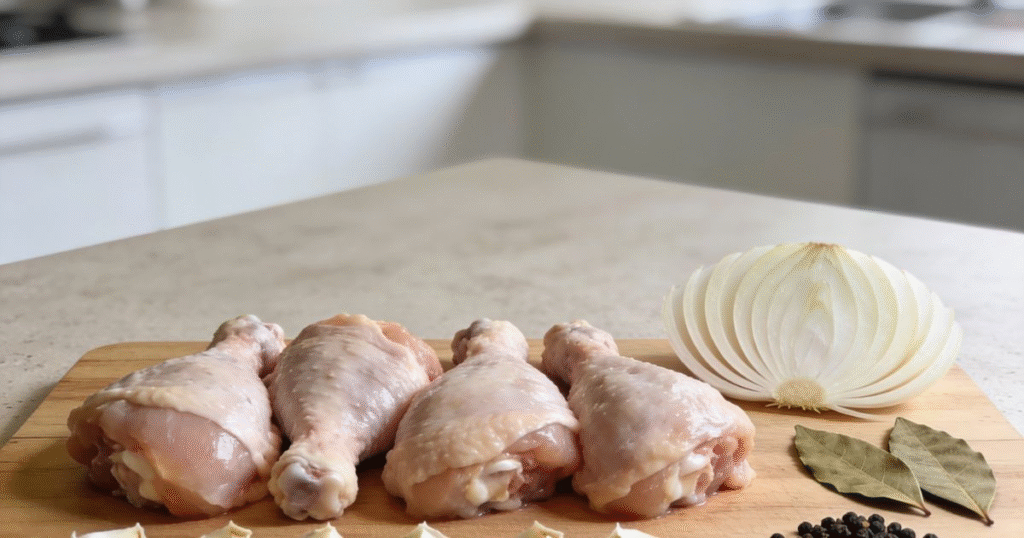
- 2 pounds chicken thighs or drumsticks
- 10 cloves garlic, crushed
- 1 large onion, sliced
- 2 bay leaves
- 1 teaspoon whole black peppercorns
For the Sauce:
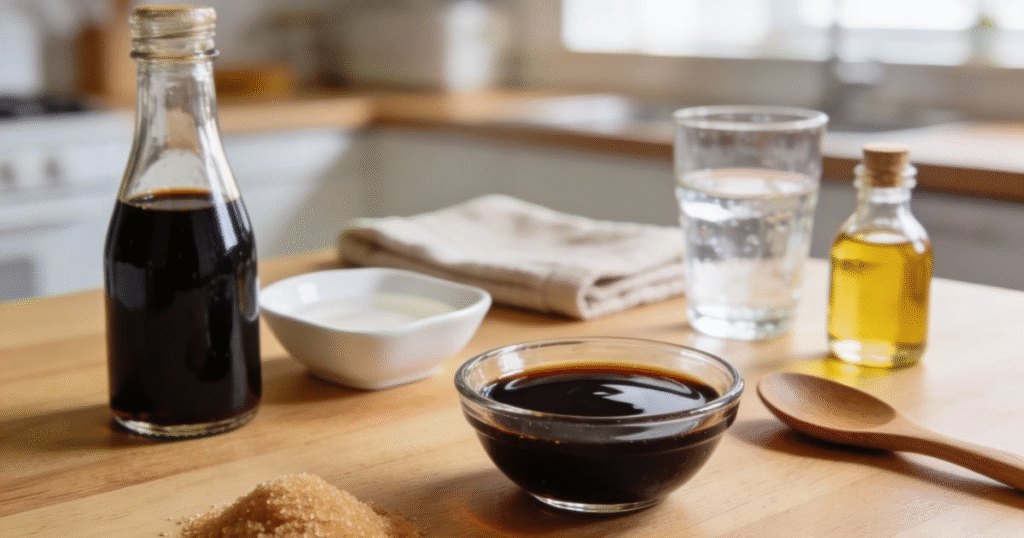
- ½ cup soy sauce
- ½ cup white vinegar
- 1 cup water
- 2 tablespoons brown sugar
- 1 tablespoon cooking oil
How to Make This Recipe
Step 1: Prepare the Ingredients
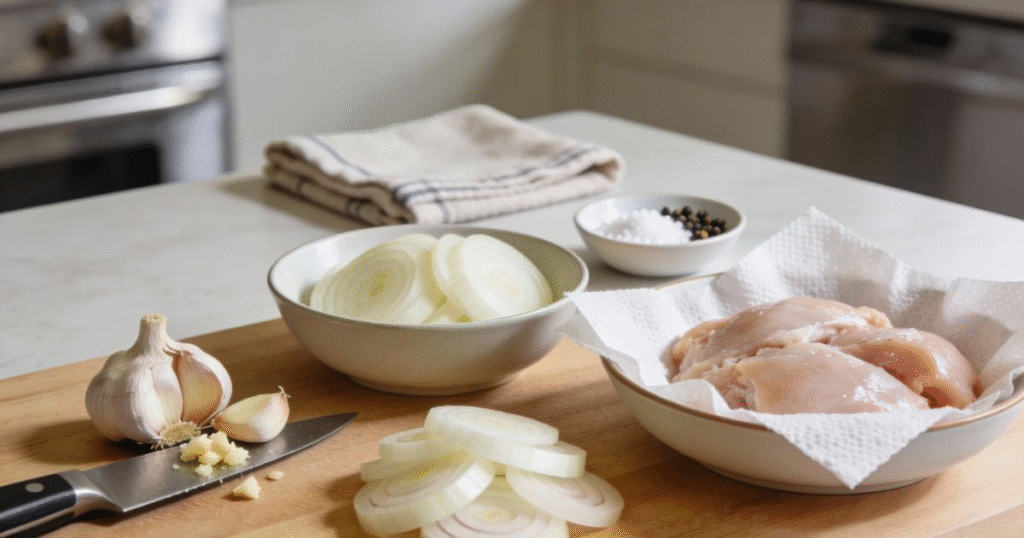
Crush the garlic cloves with the side of a knife but keep them whole. This releases more flavor than chopping.
Slice the onion into half-moons about ¼ inch thick. Set all ingredients within easy reach before you start cooking.
Pat the chicken pieces dry with paper towels. This step helps them brown better in the pan.
Step 2: Brown the Chicken
Heat the cooking oil in a large, deep skillet or Dutch oven over medium-high heat. Wait until the oil shimmers.
Lay the chicken pieces in the hot oil with the skin side facing down.
I can provide a few more alternatives if you want.Brown them for 3-4 minutes without moving.
Turn the chicken over and cook the other side until browned, about 3 minutes. At this point, it doesn’t need to be fully cooked.
Take the browned chicken out of the pan and place it on a plate to set aside. Leave the flavorful drippings in the pan.
Step 3: Sauté the Aromatics
Add the crushed garlic to the same pan with the chicken drippings. Cook, stirring, for 1–2 minutes until aromatic and lightly browned.
Toss in the sliced onions and cook for 2 minutes until they start to soften. Stir occasionally to prevent burning.
The aromatics will pick up all the tasty browned bits from the bottom of the pan. This builds deep flavor in your adobo sauce.
Step 4: Build the Adobo Sauce
Return the chicken pieces to the pan, arranging them in a single layer if possible. Nestle them among the garlic and onions.
Pour the soy sauce, vinegar, and water over the chicken. The liquid should come about halfway up the sides of the chicken.
Add the bay leaves, peppercorns, and brown sugar directly to the liquid. Do not stir at this point.
Step 5: Simmer the Adobo
Raise the heat to high and bring the mixture to a boil, then lower it to medium-low as soon as it starts boiling.
Cover the pan and simmer the chicken for 25–30 minutes, until it’s tender and thoroughly cooked.
Take off the lid and let the chicken simmer for another 10–15 minutes to thicken the sauce and intensify the flavors.
Step 6: Final Touches
Turn the chicken pieces occasionally while they finish simmering. This ensures even coating with the sauce.
Check that the internal temperature of the chicken reaches 165°F. The meat should come off the bone effortlessly.
Taste the sauce and adjust seasoning if needed. Some people prefer adding more soy sauce or vinegar to taste.
Remove the bay leaves before serving. Spoon the garlic, onions, and sauce over the chicken generously.
Cooking Method Variations
Slow Cooker Adobo Chicken Recipe
Place all ingredients directly into your slow cooker without browning the chicken first. This low-maintenance approach is ideal for busy days.
Arrange the chicken pieces on the bottom of the crockpot. Layer the garlic and onions on top.
Pour the soy sauce, vinegar, water, and seasonings over everything. Add the bay leaves and peppercorns.
Slow cook on low for 6–7 hours or on high for 3–4 hours, until the chicken is tender and easily falls off the bone.
Remove the chicken pieces and place them under the broiler for 3-4 minutes. This creates a caramelized finish similar to traditional stovetop adobo.
Instant Pot Chicken Adobo
Set the Instant Pot to sauté mode and brown the chicken pieces in oil for 3-4 minutes per side. Remove and set aside.
Sauté the garlic and onions for 2 minutes in the same pot. Add the chicken back along with all liquid ingredients and seasonings.
Secure the lid and turn the valve to the sealing position.Cook on high pressure for 12 minutes.
Let the pressure release naturally for 10 minutes, then carefully perform a quick release for any remaining pressure.The chicken will be perfectly tender.
Use the sauté function again to reduce the sauce for 5-7 minutes. This thickens the liquid into a rich, coating consistency.
Oven Baked Chicken Adobo
Preheat your oven to 375°F. Follow steps 1-4 of the base recipe in an oven-safe Dutch oven.
Bring the mixture to a boil on the stovetop, then cover and transfer to the oven. Bake for 35-40 minutes.
Take off the lid and continue baking for another 15 minutes. The exposed chicken develops a beautiful caramelized top.
This method works wonderfully when cooking for a crowd. You can double the recipe easily in a large roasting pan.
Air Fryer Chicken Adobo
Marinate the chicken in the soy sauce, vinegar, garlic, and seasonings for at least 2 hours. This infuses maximum flavor.
Take the chicken out of the marinade and gently pat it dry. Save the marinade for the sauce.
Place the chicken in the air fryer basket at 380°F. Cook for 20-25 minutes, flipping halfway through.
Meanwhile, simmer the reserved marinade with onions in a saucepan for 15 minutes. This creates your adobo sauce.
Brush the cooked chicken with the reduced sauce before serving. The air fryer creates incredibly crispy skin.
Spicy Chicken Adobo
Add 2-3 Thai chilies or 1 tablespoon of crushed red pepper flakes to the sauce. This brings heat without overwhelming the traditional flavors.
Increase the black peppercorns to 2 teaspoons for extra kick. The pepper heat builds gradually as the dish simmers.
Serve with extra sliced fresh chilies on the side. Let each person adjust the spice level to their preference.
Storage and Reheating
Refrigerator Storage
Let the adobo cool to room temperature before transferring to containers. The sauce will thicken as it cools.
Keep in airtight containers in the fridge for up to 5 days; the flavors will mellow and intensify after a day.
Keep the chicken pieces submerged in the sauce. This prevents them from drying out during storage.
Freezer Storage
Place cooled adobo in freezer-safe containers with tight-fitting lids. Leave 1 inch of headspace for expansion.
Freeze for up to 3 months without compromising quality, and label each container with the date for easy reference.
Thaw frozen adobo in the refrigerator overnight. Never thaw at room temperature to maintain food safety.
Reheating Instructions
Reheat portions in a covered saucepan over medium-low heat for 8-10 minutes. Stir occasionally to prevent sticking.
Stir in a little water if the sauce gets too thick.The liquid helps restore the original consistency.
Microwave individual servings in a covered dish for 2-3 minutes. Stir halfway through for even heating.
The chicken tastes even better the next day as the flavors meld together. Many Filipino families intentionally make extra for leftovers.
FAQs
What does adobo mean in Filipino cooking?
Adobo refers to a cooking method where meat marinates and simmers in vinegar, soy sauce, and garlic. The word comes from Spanish but Filipino adobo developed its own unique style using local ingredients. This traditional cooking technique preserves meat while creating deep, savory flavors that define Filipino comfort food.
What is the secret to good chicken adobo?
The balance between soy sauce and vinegar creates authentic adobo flavor. Use a 1:1 ratio and resist the urge to stir immediately after adding the vinegar—this preserves its sharpness. Quality ingredients and proper simmering time allow the flavors to develop fully, creating that classic sweet-salty-tangy taste.
Should I use chicken thighs or breasts for adobo?
Chicken thighs deliver the most authentic, flavorful results for Filipino chicken adobo. The dark meat stays juicy and tender during the long simmer time. Chicken breasts work in a pinch but dry out more easily and require shorter cooking time—reduce simmering to 20 minutes total for breast meat.
Can I make chicken adobo less salty?
Opt for low-sodium soy sauce to cut down on salt while keeping the flavor intact.You can also adjust the ratio to ⅓ cup soy sauce with ⅔ cup vinegar for a tangier, less salty version. Adding more water dilutes the saltiness while extending the sauce for serving over rice.
How long can chicken adobo be stored in the fridge?
Properly stored chicken adobo stays fresh for 4-5 days in the refrigerator.Vinegar and soy sauce help preserve the dish naturally. Store the chicken in its sauce in an airtight container, and always reheat thoroughly before eating.
Tips, Tricks, and Serving Suggestions
Preparation Tips
Use bone-in, skin-on chicken for the most authentic texture and flavor. The bones add richness to the sauce while the skin crisps beautifully.
Choose white vinegar or cane vinegar for traditional Filipino taste. Apple cider vinegar works as a substitute but creates a slightly different flavor profile.
Soak the chicken in the soy sauce mixture for 30 minutes before cooking.This optional step infuses even more flavor into the meat.
Double or triple the garlic if you love strong garlic flavor. Traditional Filipino adobo is known for its bold, garlicky taste.
Cooking Tips
Never stir the pot immediately after adding vinegar. Let it simmer undisturbed for the first 10 minutes to cook off the harsh acidity.
Keep the mixture at a gentle simmer instead of a vigorous boil.High heat toughens the chicken and evaporates too much liquid.
Skim any foam that rises to the surface during the first few minutes of simmering. This creates a cleaner-tasting sauce.
Taste the sauce only after it has simmered for at least 15 minutes. The flavors need time to meld and mellow.
Sauce Adjustments
Add a tablespoon of coconut milk during the last 5 minutes for creamy adobo. This version is favored in specific areas of the Philippines.
Include a splash of Sprite or 7-Up for a slightly sweet twist. Some Filipino cooks swear by this secret ingredient.
Stir in a tablespoon of oyster sauce for deeper umami flavor. This addition creates restaurant-style richness.
Mix in a teaspoon of sesame oil at the end for nutty depth. This Asian pantry staple elevates the overall taste.
Regional Variations
Make adobo sa gata by adding coconut milk for a richer, creamier version. This style is popular in the Bicol region.
Try adobong puti using only vinegar and no soy sauce for a lighter-colored dish. This white adobo showcases the vinegar’s tang.
Create adobong dilaw by adding turmeric for golden color and earthy flavor. This variation offers anti-inflammatory benefits.
Serving Suggestions
Serve this classic Filipino dish over steaming white rice. The rice absorbs the rich sauce beautifully.
Pair with simple sautéed vegetables like bok choy or green beans. The fresh vegetables balance the rich, savory adobo.
Make adobo rice bowls by layering rice, chicken, a fried egg, and pickled vegetables. This complete meal-in-a-bowl works great for lunch ideas.
Use leftover adobo as a filling for tacos or burritos. The fusion twist makes excellent use of extras.
Shred the chicken and toss with the sauce for adobo flakes. Serve this over fried rice for a Filipino breakfast favorite.
Create adobo sandwiches on crusty rolls with pickled carrots and cilantro. This Vietnamese-inspired take offers exciting new flavors.
Serve alongside pancit (Filipino noodles) and lumpia (spring rolls) for a complete Filipino feast. This combination showcases traditional Filipino food.
Add a side of atchara (pickled papaya) to cut through the richness. The tangy pickle provides perfect contrast.