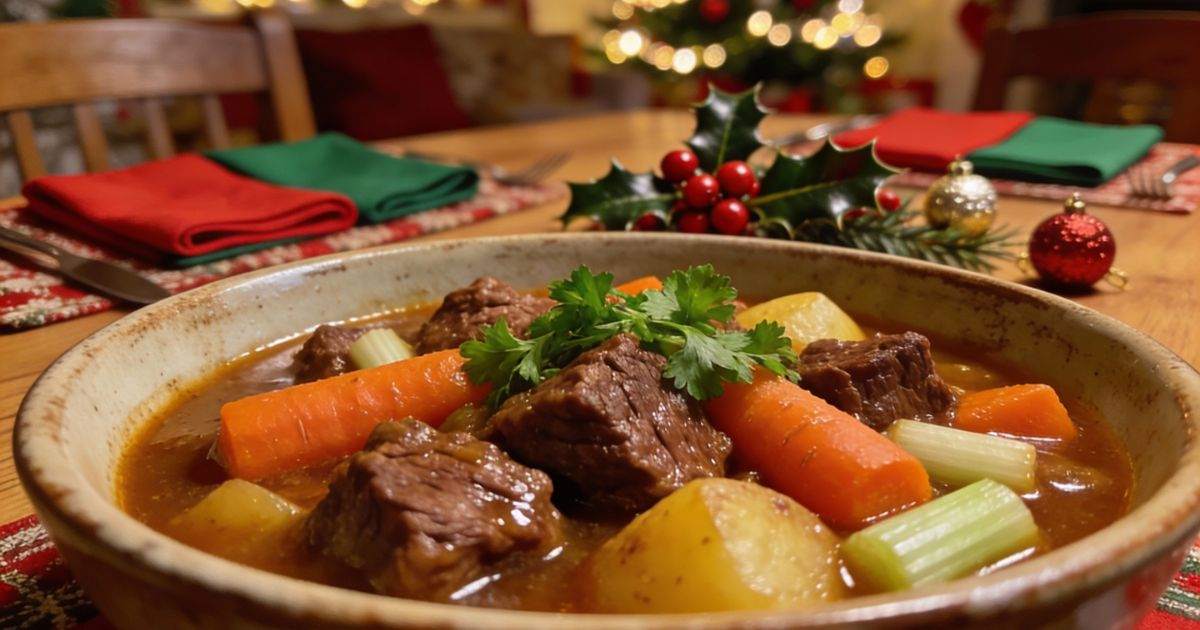
Hearty Stew Beef with Vegetables: Christmas Dinner Recipes
Have you ever wondered why a perfectly executed stew beef with vegetables can maintain its tender texture and rich flavor for up to 48 hours after cooking—actually improving with time—while most other dishes lose quality within hours? The secret lies in the magical transformation that occurs during slow simmering, where tough collagen breaks down into silky gelatin that envelops every ingredient in savory richness. This stew beef with vegetables represents the ultimate comfort food centerpiece for Christmas dinner, combining fork-tender beef chunks with hearty root vegetables in a deeply flavored broth that warms both body and soul during the coldest, most festive season of the year.
A stew beef with vegetables offers the perfect solution for holiday hosts seeking crowd-pleasing satisfaction without the intimidation of carving roasts or the constant oven monitoring that traditional centerpieces demand. This one-pot wonder delivers maximum flavor with minimal fuss, making it ideal for casual family gatherings, potluck contributions, or cozy Christmas Eve dinners where comfort trumps formality. The extended simmering fills your home with irresistible aromas that create the welcoming atmosphere guests crave during holiday celebrations, while the make-ahead friendly nature means you can prepare it entirely the day before, allowing stress-free entertaining when it matters most.
Ingredients List

For the Beef:
- 3 pounds beef chuck roast, cut into 1½-inch cubes (well-marbled meat ensures tenderness)
- 3 tablespoons all-purpose flour (for dredging; creates flavorful coating)
- 2 teaspoons kosher salt (plus additional for seasoning)
- 1 teaspoon freshly ground black pepper
- 1 teaspoon smoked paprika
- 3 tablespoons olive oil or vegetable oil (for browning in batches)
For the Vegetables:
- 4 large carrots, peeled and cut into 1-inch pieces (adds natural sweetness)
- 3 large russet or Yukon gold potatoes, peeled and cut into 1½-inch chunks (provides hearty substance)
- 3 celery stalks, cut into 1-inch pieces (aromatic foundation)
- 2 large onions, roughly chopped (builds savory base)
- 8 ounces mushrooms, quartered (adds earthy umami depth)
- 3 large parsnips, peeled and cut into 1-inch pieces (sweet, nutty flavor)
- 1 cup frozen peas
For the Stew Base:
- 6 cups beef stock (low-sodium preferred; homemade elevates significantly)
- 2 cups water (adjust for desired consistency)
- 3 tablespoons tomato paste (concentrated umami and color)
- 6 cloves garlic, minced (aromatic complexity)
- 2 tablespoons Worcestershire sauce (savory depth)
- 3 bay leaves
- 4 fresh thyme sprigs (or 2 teaspoons dried thyme)
- Two sprigs of fresh rosemary, or substitute with 1 teaspoon of dried rosemary
- 1 teaspoon dried oregano
- 2 tablespoons balsamic vinegar (brightens and balances)
For Finishing:
- 2 tablespoons butter (optional, for richness)
- 2 tablespoons fresh parsley, chopped (for garnish)
- Salt and pepper to taste
Substitution Suggestions: Replace beef chuck with stew meat, short ribs, or brisket. Substitute sweet potatoes for regular potatoes. Use turnips instead of parsnips. Add green beans, butternut squash, or pearl onions for variety. For gluten-free, use cornstarch instead of flour for dredging (use 2 tablespoons). Replace Worcestershire with coconut aminos for gluten-free/soy-free option.
Timing
Preparation Time: 30 minutes (including chopping vegetables and browning meat)
Cooking Time: 2 hours 30 minutes – 3 hours (slow simmering until fork-tender)
Resting Time: 10 minutes (allows flavors to settle)
Total Time: Approximately 3 hours 15 minutes
This timing represents mostly hands-off cooking after the initial preparation, requiring only occasional stirring and checking. The extended simmering period actually works in your favor for holiday entertaining, as the stew can simmer while you prepare other dishes, set the table, or enjoy time with arriving guests. The forgiving nature of stew means it won’t suffer if it simmers an extra 30 minutes—in fact, it often improves.
Step-by-Step Instructions
Step 1: Prepare and Season the Beef
Pat beef cubes completely dry with paper towels—moisture prevents proper browning and creates steam instead of caramelization. In a shallow bowl, combine flour, salt, pepper, and smoked paprika, mixing well. Working in batches, toss beef cubes in the seasoned flour mixture, shaking off excess. This light coating helps create a flavorful crust during browning while also thickening the stew liquid naturally as it simmers. Set floured beef aside on a plate while you prepare for searing.
Pro Tip: Dry meat surfaces and proper seasoning are essential for developing the deep, complex flavors that distinguish exceptional stew from ordinary versions.
Step 2: Brown the Beef in Batches for Maximum Flavor
Heat 2 tablespoons of oil in a large, heavy-bottomed Dutch oven or stockpot over medium-high heat until shimmering. Add beef in a single layer without crowding—work in 2-3 batches to ensure proper browning rather than steaming. Sear each batch for 3-4 minutes per side until deeply golden-brown crust forms. The meat should release easily when properly caramelized—resist moving it prematurely. Place the browned beef on a plate and set it aside. Add remaining oil between batches as needed. This browning process creates fond (flavorful browned bits) on the pot bottom that forms the foundation of your stew’s rich taste.
Critical Step: Don’t skip or rush the browning—this Maillard reaction develops hundreds of complex flavor compounds that cannot be replicated through any other cooking method.
Step 3: Build the Aromatic Vegetable Base
Reduce heat to medium and add chopped onions, carrots, and celery to the pot (using the same unwashed pot with all those flavorful browned bits). Sauté for 6-8 minutes, stirring occasionally and scraping the pot bottom to release the fond. The vegetables should soften and develop light golden color around the edges. Add minced garlic and tomato paste, stirring constantly for 2 minutes until the tomato paste darkens slightly and becomes fragrant. This cooking process removes raw tomato taste while intensifying umami flavors that deepen the stew’s overall complexity.
Flavor Building: Each layer of cooking—browning meat, sautéing vegetables, toasting tomato paste—adds dimensional flavor that creates complexity far beyond simply simmering everything together.
Step 4: Deglaze and Create the Stew Liquid
Pour 1 cup of beef stock into the pot, using a wooden spoon to vigorously scrape up all the browned bits stuck to the bottom—this deglazing process captures concentrated flavor that would otherwise be lost. Add the remaining beef stock, water, Worcestershire sauce, balsamic vinegar, bay leaves, thyme sprigs, rosemary sprigs, and oregano, stirring to combine. Add the browned beef and any juices that collected back into the pot. Bring everything to a boil over high heat, then immediately reduce heat to maintain a gentle simmer. The surface should show occasional small bubbles but never a rolling boil, which toughens meat rather than tenderizing it.
Temperature Control: Maintaining a gentle simmer (not a vigorous boil) is crucial for breaking down collagen slowly into tender gelatin without toughening proteins.
Step 5: Simmer Until Fork-Tender Perfection
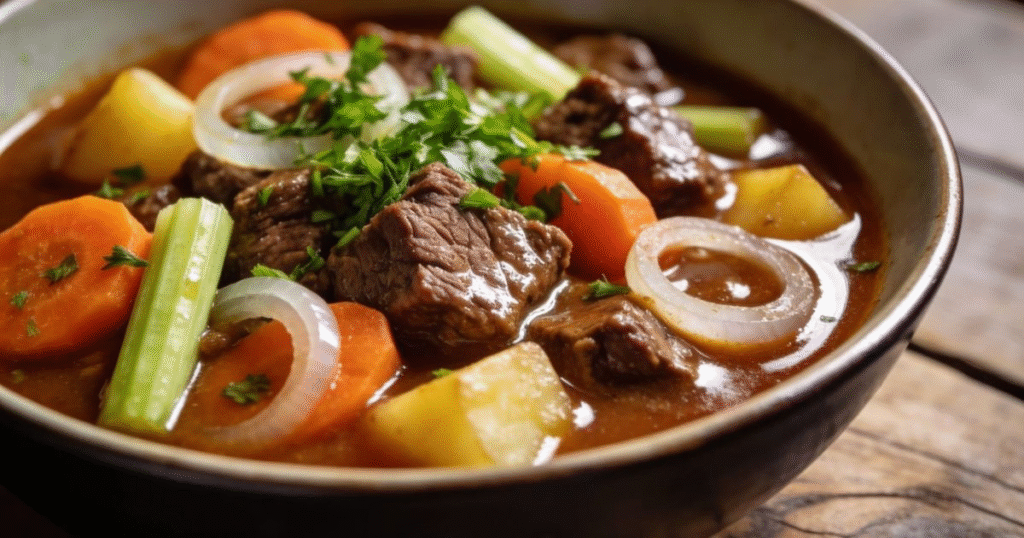
Cover the pot with a lid slightly ajar (allowing some steam to escape and concentrating flavors) and simmer gently for 1½ hours, stirring occasionally to prevent sticking. After 1½ hours, add potatoes, parsnips, and mushrooms to the stew, stirring to submerge them in the liquid. Continue simmering covered for another 45-60 minutes until both beef and vegetables are fork-tender. Test beef by piercing with a fork—it should slide in easily and the meat should practically fall apart with gentle pressure. If still tough, continue simmering in 15-minute increments.
Timing Variation: Tougher cuts may require 3-3½ hours total simmering, while particularly tender pieces might finish in 2 hours. Always rely on texture testing rather than strict timing.
Step 6: Add Final Vegetables and Adjust Consistency
Once beef is tender, add frozen peas and stir gently. Simmer uncovered for 5-10 minutes until peas are heated through and bright green. Assess the stew’s consistency—if too thin, simmer uncovered for 10-15 minutes longer to reduce and concentrate. If too thick, add additional stock or water in ¼-cup increments until reaching desired consistency. The stew should be thick enough to coat a spoon but still fluid enough to serve easily with a ladle.
Consistency Guide: Stew beef with vegetables should be thicker than soup but not so thick that it’s dry—aim for a rich, gravy-like consistency that clings to the meat and vegetables.
Step 7: Finish and Season to Perfection
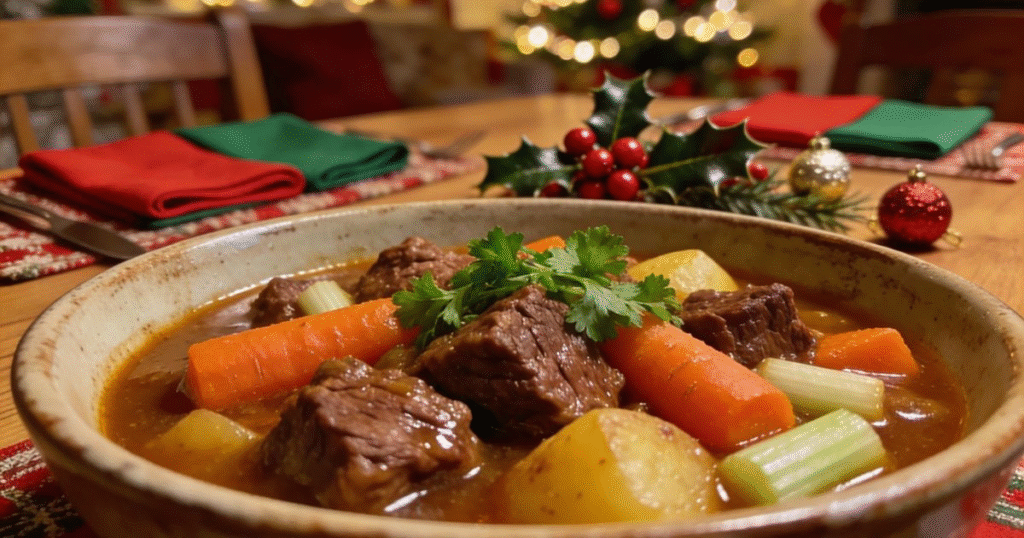
Remove and discard bay leaves, thyme sprigs, and rosemary sprigs. Taste the stew and adjust seasoning with salt and pepper as needed—stews often need more salt than you expect due to the large volume of liquid and vegetables. For added richness, stir in the butter after removing the pot from the heat until it fully melts and blends in. Let the stew rest for 10 minutes before serving, allowing flavors to meld and settle. Ladle into warmed bowls, garnish with fresh chopped parsley, and serve with crusty bread for soaking up the delicious broth.
Final Touch: That brief rest after cooking allows everything to harmonize while bringing the temperature down slightly from scalding to perfectly enjoyable eating temperature.
Nutritional Information
Per Serving (based on 8 servings, approximately 1½ cups each):
- Calories: 420 kcal
- Total Fat: 16g (25% Daily Value)
- Saturated Fat: 5g
- Trans Fat: 0g
- Cholesterol: 95mg (32% DV)
- Sodium: 720mg (31% DV)
- Total Carbohydrates: 35g (13% DV)
- Dietary Fiber: 6g (24% DV)
- Sugars: 8g
- Protein: 36g (72% DV)
- Vitamin A: 180% DV
- Vitamin C: 45% DV
- Iron: 28% DV
- Potassium: 35% DV
- Vitamin B12: 40% DV
- Zinc: 45% DV
Nutritional Highlights: This stew beef with vegetables provides exceptional nutritional balance, combining high-quality complete protein from beef with fiber-rich vegetables and complex carbohydrates from potatoes. The impressive vitamin A content (primarily from carrots and parsnips) supports vision and immune function, while iron in highly absorbable heme form supports oxygen transport. The abundant vegetables provide antioxidants, minerals, and phytonutrients that complement the protein-rich beef for a truly nourishing Christmas dinner.
Healthier Alternatives for the Recipe
Reduce Fat Content: Trim all visible fat from beef before cutting into cubes, reducing total fat by approximately 20-25%. After cooking, refrigerate the entire stew overnight—fat solidifies on top for easy removal the next day, eliminating up to 40% of fat while actually improving flavor as ingredients absorb more broth overnight.
Increase Vegetable Ratio: Double the vegetable quantities while keeping beef amount constant. This increases fiber, vitamins, and antioxidants while naturally reducing calories and fat per serving. Add additional vegetables like green beans, Brussels sprouts, cabbage, or butternut squash for even more nutritional diversity.
Lower Sodium Strategy: Use no-salt-added beef stock and eliminate added salt during cooking, seasoning individual portions to taste at the table. This gives complete control over sodium intake, typically reducing total sodium by 40-50%. Fresh herbs provide abundant flavor without requiring salt.
Whole Grain Addition: Replace half the potatoes with hulled barley, farro, or brown rice added during the last 45 minutes of cooking. These whole grains add fiber, B vitamins, and chewy texture while reducing the glycemic impact of the stew compared to potatoes alone.
Leaner Protein Options: Substitute beef sirloin or top round for chuck roast—these leaner cuts contain approximately 30% less fat while still becoming tender with proper slow cooking. Alternatively, use half beef and half lean turkey breast for reduced fat with maintained heartiness.
Broth-Based Rather Than Gravy-Thick: Skip the flour dredging step and don’t reduce the liquid at the end, resulting in a lighter, brothier stew with fewer calories and less starchy thickness. This style highlights the natural vegetable and beef flavors more distinctly.
Portion Control Awareness: Serve over cauliflower rice or zucchini noodles instead of with bread, reducing total carbohydrates while increasing vegetable intake. This creates a complete meal without additional starch.
Serving Suggestions
Traditional Christmas Dinner Presentation: Serve your stew beef with vegetables in large, shallow bowls alongside warm, crusty artisan bread or homemade dinner rolls for soaking up the delicious broth. Add a simple green salad with vinaigrette and roasted Brussels sprouts with balsamic glaze for a complete, comforting holiday meal.
Rustic Family-Style Service: Present the stew in a beautiful large serving bowl or decorative Dutch oven directly on the table, allowing guests to serve themselves family-style. Provide a basket of assorted breads (sourdough, rye, whole wheat) and compound herb butter for an interactive, communal dining experience.
Individual Bowl Presentation: Ladle stew into individual warmed bowls, garnishing each with fresh parsley, a small rosemary sprig, and a drizzle of high-quality olive oil for restaurant-quality presentation. Serve with garlic bread on the side for an elegant yet approachable holiday dinner.
Bread Bowl Service: Hollow out small round sourdough loaves and ladle hot stew inside for an impressive, edible serving vessel. This presentation creates visual drama while providing delicious bread for enjoying every last drop of flavorful broth.
Contemporary Holiday Spread: Pair with modern sides like quinoa pilaf with dried cranberries, roasted root vegetable medley with thyme, citrus-dressed kale salad with pomegranate seeds, and garlic-roasted green beans for a lighter, updated Christmas dinner that still delivers satisfying warmth.
Beverage Pairing Recommendations: Hearty stew pairs beautifully with robust beverages. Consider hot apple cider with cinnamon sticks, rich hot chocolate with marshmallows, sparkling cranberry juice with fresh mint, or warm spiced pear juice for non-traditional holiday pairings that complement the stew’s depth.
Make-Ahead Advantage: This stew beef with vegetables actually improves when made 1-2 days ahead, making it ideal for stress-free Christmas entertaining. The flavors deepen and meld overnight, and reheating is effortless—simply warm gently on the stovetop or in a low oven.
Leftover Innovation: Transform remaining stew into new dishes—use as filling for savory hand pies or pot pie with puff pastry topping, serve over mashed potatoes or polenta for shepherd’s pie variation, or add additional broth and vegetables for hearty soup.
Common Mistakes to Avoid
Skipping the Browning Step: Many cooks rush or eliminate browning to save time, but this step creates the flavor foundation that defines exceptional stew. Without proper caramelization, your stew will taste flat and one-dimensional regardless of simmering time. Always brown meat properly in uncrowded batches.
Boiling Instead of Simmering: Vigorous boiling causes meat proteins to seize and toughen while making vegetables mushy and disintegrated. Maintain a gentle simmer with occasional small bubbles—low and slow is the mantra for tender, flavorful stew beef with vegetables.
Adding All Vegetables at Once: Root vegetables like potatoes and carrots need less cooking time than tough beef. Adding everything simultaneously results in mushy, overcooked vegetables by the time meat becomes tender. Add hardy vegetables during the last 45-60 minutes of cooking.
Using Lean Meat: While lean cuts seem healthier, they lack the marbling and collagen necessary for becoming fork-tender through stewing. Lean meat remains tough and dry even with extended cooking. Choose well-marbled chuck roast specifically labeled for stewing.
Cutting Meat Too Small: Tiny beef pieces shrink dramatically during long cooking, becoming dry bits rather than tender chunks. Cut beef into generous 1½-inch pieces—they’ll shrink to perfect bite-sized portions during the extended simmering.
Not Adjusting Seasoning at the End: Stew flavors mellow and dilute during cooking as vegetables release moisture and flavors meld. Always taste and adjust salt, pepper, and acidity at the end for a balanced, well-seasoned final dish.
Overcrowding During Browning: Adding too much meat at once drops pan temperature, causing steaming instead of searing. Work in batches, giving each piece adequate space for proper caramelization even if it takes longer.
Lifting the Lid Constantly: Frequent peeking releases heat and steam, extending cooking time significantly. Resist checking more than every 30 minutes during simmering—trust the process and let low, steady heat work its magic.
Storing Tips for the Recipe
Optimal Refrigeration Method: Allow stew to cool to room temperature within 2 hours of cooking, then transfer to airtight containers. Properly stored stew beef with vegetables maintains optimal quality for 3-4 days refrigerated at 40°F or below. Store in shallow containers for faster cooling and even refrigeration.
Overnight Refrigeration Benefits: Making stew a day ahead offers multiple advantages—easier fat removal (solidifies on top for simple skimming), deeper flavor development as ingredients absorb broth overnight, and complete elimination of day-of cooking stress for holiday entertaining.
Freezing Guidelines: This stew freezes excellently for 2-3 months. Let the mixture cool fully, then divide it into freezer-safe containers or sturdy freezer bags, leaving about an inch of space for expansion.
Freezing Consideration: If you know you’ll be freezing the stew, slightly undercook the potatoes (keep them slightly firm) as they’ll soften further during reheating. Alternatively, omit potatoes before freezing and add freshly cooked potatoes when reheating.
Proper Reheating Technique: For refrigerated stew, reheat gently in a covered pot over medium-low heat, stirring occasionally, until heated through (about 20-30 minutes). For frozen stew, thaw completely in the refrigerator overnight, then reheat using the same method. Add splash of stock or water if stew seems too thick after storage.
Stovetop vs. Microwave Reheating: Always choose stovetop reheating over microwave when possible. Gentle, even stovetop warming maintains texture and flavor, while microwave heating can create hot spots and toughen meat. If using microwave, heat at 50% power in short intervals, stirring between.
Portion Control Storage: Divide leftover stew into individual or family-sized portions before freezing. This allows you to thaw only what you need rather than the entire batch, maintaining better quality and reducing waste.
Fresh Herb Addition: When reheating, consider adding a sprinkle of fresh herbs like parsley, thyme, or rosemary just before serving. These additions restore vibrancy that can diminish during storage.
Conclusion
This stew beef with vegetables delivers everything you desire in a Christmas dinner centerpiece—fork-tender beef, hearty vegetables, and rich, savory broth that provides both comfort and nourishment during the holiday season’s coldest days. The slow-simmering technique transforms affordable chuck roast into melt-in-your-mouth perfection while filling your home with irresistible aromas that create the welcoming atmosphere guests crave, and the make-ahead friendly nature means you can prepare it entirely the day before for completely stress-free holiday entertaining.
Ready to create the ultimate comfort food Christmas dinner? Try this stew beef with vegetables recipe and share your results in the review section below—we’d love to hear what vegetables you included and how your family enjoyed this hearty feast! Don’t forget to leave a comment on our blog with your favorite serving suggestions, creative variations, or time-saving tips you discovered, and subscribe for more comforting holiday recipes and seasonal inspiration delivered straight to your inbox. Happy holidays and happy cooking!
FAQs
Q: What’s the best cut of beef for making stew?
A: Beef chuck roast is ideal for stew—it contains perfect marbling and collagen that breaks down during slow cooking into tender, flavorful meat. Chuck shoulder, chuck eye roast, or pre-cut “stew meat” (which is typically chuck) all work excellently. Avoid lean cuts like sirloin or round steak, as they lack sufficient fat and collagen to become tender through stewing, remaining tough and dry even with extended cooking.
Q: Can I make this stew beef with vegetables in a slow cooker?
A: Absolutely! Brown the beef and sauté the aromatics on the stovetop first (don’t skip this crucial flavor-building step), then transfer everything to your slow cooker with the liquids and seasonings.Slow-cook on low for 7–8 hours, or on high for 4–5 hours. Add potatoes, parsnips, and mushrooms during the last 2 hours on low (or 1 hour on high). Add peas during the final 15 minutes for best color and texture.
Q: Why is my stew beef still tough after hours of cooking?
A: Tough stew beef after extended cooking typically results from too-high temperature (boiling instead of simmering) or simply insufficient cooking time. Chuck roast needs 2½-3 hours minimum at gentle simmer to break down collagen. If your stew is tough, continue simmering—the meat will eventually become tender. Once collagen breaks down, meat transforms rapidly from tough to tender within about 30 minutes.
Q: Can I prepare stew beef with vegetables ahead for Christmas dinner?
A: Yes—this is actually ideal for advance preparation! Make the complete stew 1-2 days ahead, cool completely, and refrigerate. The flavors deepen and improve overnight as ingredients absorb the flavorful broth. The next day, skim any solidified fat from the top, then reheat gently on the stovetop. This approach eliminates day-of cooking stress while actually producing superior flavor.
Q: What vegetables can I add or substitute in beef stew?
A: Stew is highly adaptable to personal preferences and seasonal availability. Excellent additions include turnips, rutabaga, sweet potatoes, butternut squash, green beans, pearl onions, leeks, or cabbage. Each vegetable requires different cooking times—add hardy root vegetables during the last hour, softer vegetables like green beans or peas during the final 10-15 minutes. Avoid delicate vegetables like zucchini or summer squash, which become mushy.
Q: How can I make my stew more flavorful?
A: Layer flavors at each step: brown meat thoroughly for caramelization, sauté vegetables until golden, toast tomato paste, deglaze to capture fond, use quality stock rather than water, and add umami boosters like Worcestershire sauce, tomato paste, or mushrooms. Finish with fresh herbs and adjust acidity with balsamic vinegar or lemon juice. Each step builds complexity that creates depth beyond simply simmering everything together.
Q: Is it necessary to dredge beef in flour before browning?
A: While not absolutely necessary, flour dredging serves two purposes: it helps create a better crust during browning and naturally thickens the stew liquid as it cooks. If you prefer brothier stew or need gluten-free preparation, skip the flour—your stew will be thinner but still delicious. You can always thicken at the end with cornstarch slurry if desired.
Q: Can I use a pressure cooker or Instant Pot for faster cooking?
A: Yes! Brown beef using the sauté function, then add all ingredients except peas and potatoes (which cook quickly). Cook under high pressure for 35 minutes, then allow a natural release for 15 minutes. Add potatoes and parsnips, cook high pressure 5 more minutes, quick release. Add peas, let sit 5 minutes. Total time reduces to about 75 minutes while producing similar tender results, though slow-cooked stew develops slightly deeper flavor.
Q: What should I serve with beef stew for a complete Christmas dinner?
A: Crusty bread or dinner rolls are essential for soaking up delicious broth. Add a fresh green salad with vinaigrette for contrast, roasted or steamed green vegetables (green beans, broccoli, asparagus), and perhaps a light dessert like fruit crisp or panna cotta. The stew is so hearty and complete that it needs minimal accompaniments—focus on fresh, bright sides that provide textural and flavor contrast to the rich, warming stew.