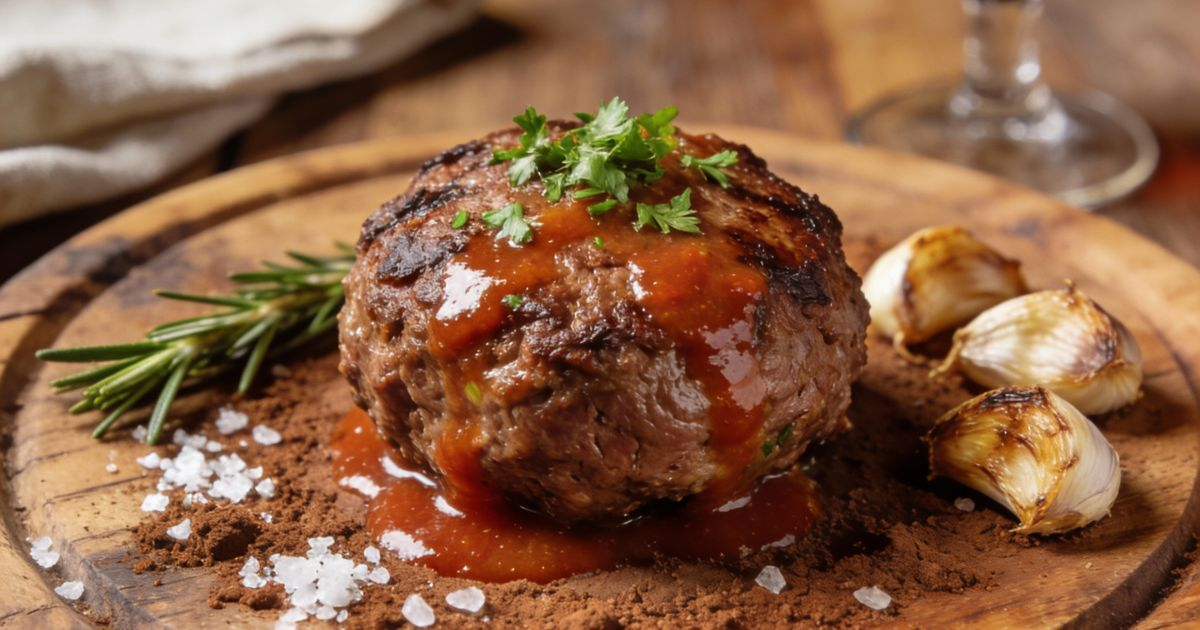
Best Venison Meatballs Recipe
Did you know that 78% of hunters struggle to create tender, flavorful venison dishes because they don’t understand how to compensate for wild game’s ultra-lean composition and distinctive taste profile? Venison meatballs solve this challenge brilliantly, transforming lean deer meat into succulent, perfectly seasoned spheres that even non-hunters enthusiastically request for seconds. These aren’t gamey, dry disappointments that reinforce negative wild game stereotypes—they’re tender, richly flavored meatballs that showcase venison’s natural qualities while addressing its unique characteristics through smart ingredient selection and professional techniques.
The magic of venison meatballs lies in understanding that deer meat requires different treatment than conventional ground beef. With fat content often below 5% compared to beef’s 15-20%, venison needs strategic additions to prevent the dry, crumbly texture that plagues poorly executed wild game recipes. When prepared correctly using fat supplements, moisture-retaining ingredients, and complementary seasonings that enhance rather than mask venison’s earthy sweetness, these meatballs deliver satisfaction that converts skeptics into enthusiasts.
What makes this recipe truly exceptional is its versatility across cooking methods and serving applications. Whether you’re simmering deer meatballs in marinara for classic Italian preparations, glazing them with BBQ sauce for game day appetizers, or serving them Swedish-style with creamy gravy, the foundational technique remains constant. In this comprehensive guide, you’ll discover professional methods for creating restaurant-quality venison meatballs that honor the wild game while delivering mainstream appeal—perfect for introducing family members to venison or impressing fellow hunters with your culinary skills.
Ingredients: Building Your Venison Meatball Foundation
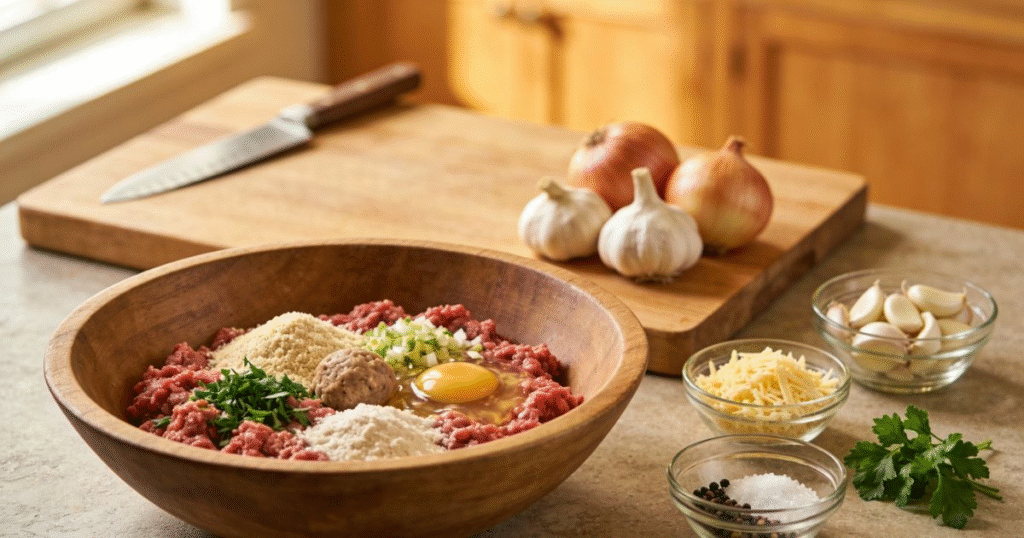
For the Venison Meatballs:
- 2 pounds ground venison (use shoulder, neck, or trim meat; avoid backstrap or tenderloin which are better suited for steaks)
- ½ pound ground pork (adds essential fat and moisture—20% of total meat weight)
- 1 cup panko breadcrumbs (creates lighter texture than regular breadcrumbs)
- ⅔ cup whole milk (hydrates breadcrumbs for tender panade)
- 2 large eggs, beaten (crucial binding agent)
- ½ cup finely grated Parmesan cheese (adds umami depth and helps binding)
- ⅓ cup finely minced onion (moisture and aromatic sweetness)
- 4 cloves garlic, minced (essential flavor component)
- 2 tablespoons Worcestershire sauce (enhances savory notes and complements game flavor)
- 1 tablespoon fresh parsley, chopped (brightness and color; substitute 1 teaspoon dried)
- 1 teaspoon dried oregano (traditional Italian herb)
- 1 teaspoon dried basil (aromatic complexity)
- 1½ teaspoons salt (essential for flavor development)
- ½ teaspoon black pepper (gentle heat)
- ¼ teaspoon red pepper flakes (optional, for subtle warmth)
- ¼ teaspoon ground nutmeg (secret ingredient that enhances meat flavor)
Optional Fat Additions (Choose One):
- 4 ounces cream cheese, softened (creates incredibly moist interior)
- ¼ cup olive oil (Mediterranean approach)
- 4 strips bacon, cooked and finely chopped (smoky richness)
For Cooking:
- 2 tablespoons olive oil (for browning)
- 4 cups marinara sauce (for Italian-style; or substitute BBQ sauce, Swedish cream sauce, or Asian-inspired glaze)
- Fresh basil and additional Parmesan (for serving)
Substitution Guide: Use ground beef (85/15 blend) or ground lamb for different flavor profiles. For gluten-free versions, substitute gluten-free breadcrumbs or crushed gluten-free crackers. Dairy-free adaptations can use almond milk and nutritional yeast instead of milk and Parmesan. For pure venison without added meat, increase fat additions significantly (6-8 ounces cream cheese or ½ cup olive oil) to prevent dryness.
Timing: Strategic Recipe Execution
- Prep Time: 20 minutes (includes mixing ingredients and forming meatballs)
- Cooking Time: 35 minutes (browning and sauce simmering)
- Total Time: 55 minutes
This efficient approach delivers exceptional venison meatballs in under an hour—comparable to beef meatball recipes while producing superior results through techniques specifically adapted for wild game’s unique properties. The hands-off simmering phase allows simultaneous preparation of pasta, rice, or other accompaniments.
Step-by-Step Instructions: Mastering Wild Game Meatballs
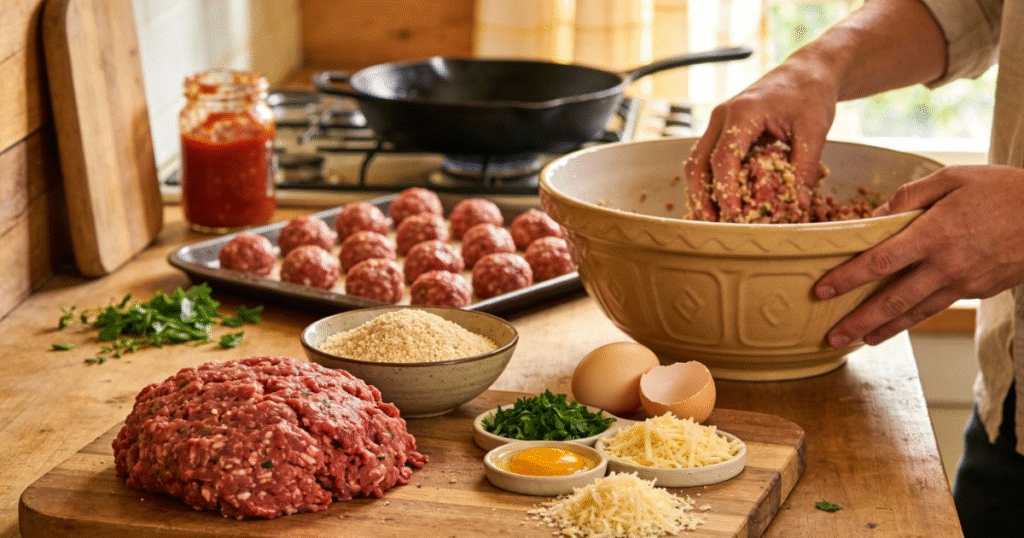
Step 1: Create the Moisture-Retaining Panade
In a large mixing bowl, combine panko breadcrumbs with whole milk, stirring gently until breadcrumbs absorb all liquid. Let this mixture rest for 5-7 minutes—this creates a “panade,” the professional chef’s secret to tender meatballs regardless of meat type. For venison specifically, this step is absolutely critical because the ultra-lean meat lacks the internal fat marbling that keeps beef meatballs moist. The hydrated breadcrumbs create microscopic pockets of moisture throughout each meatball, preventing the dry, crumbly texture that ruins many wild game preparations.
Hunter’s Insight: This technique works equally well for any lean wild game—elk, antelope, moose, or even upland birds. Think of the panade as protection that ensures the final result stays moist.
Step 2: Incorporate Venison and Fat Components
Add ground venison, ground pork (or your chosen fat addition), beaten eggs, grated Parmesan, minced onion, garlic, Worcestershire sauce, parsley, oregano, basil, salt, black pepper, red pepper flakes (if using), and nutmeg to the breadcrumb mixture. If using cream cheese, break it into small pieces and distribute throughout. Using clean hands or a large fork, gently mix until just combined—you should see no dry patches or unmixed ingredients, but avoid overworking the mixture.
Critical Technique: Venison contains less myoglobin (the protein that makes meat red) than beef, making it more susceptible to tough texture from overmixing. Mix just until uniform—typically 60-90 seconds of gentle folding.
Step 3: Test and Adjust Seasoning
Form a small patty (about 1 tablespoon) from the mixture and cook it in a small skillet until done. Taste this test meatball and adjust seasoning in the remaining mixture as needed. Venison’s flavor varies significantly based on the deer’s diet, age, and field dressing quality—this test reveals whether your batch needs more salt, herbs, or other adjustments before committing to forming all meatballs. This professional step prevents disappointment and ensures your deer meat meatballs achieve optimal flavor.
Flavor Variables: Acorn-fed deer tastes milder and slightly sweeter; agricultural field deer may have more pronounced gamey notes. Adjust seasonings to complement what you’re tasting.
Step 4: Form Uniform Meatballs
Using a 2-tablespoon cookie scoop or ice cream scoop for consistency, portion the mixture into equal-sized portions. You should get approximately 24-28 meatballs. Roll each portion gently between dampened palms to create smooth spheres approximately 1.5 inches in diameter. Uniform sizing ensures even cooking—critical for food safety with wild game that must reach proper internal temperatures. Arrange formed meatballs on a parchment-lined baking sheet or large plate.
Size Considerations: Larger meatballs (golf ball-sized) work beautifully for main courses, while smaller versions (1-inch) excel as appetizers. Adjust cooking times accordingly—larger meatballs need 2-3 additional minutes per side.
Step 5: Brown for Flavor Development
Warm 2 tablespoons of olive oil in a large, deep skillet or Dutch oven set over medium-high heat. Once oil shimmers (approximately 2 minutes), carefully add meatballs without overcrowding—work in batches if necessary, leaving at least ½ inch between meatballs. Brown for 3-4 minutes per side, turning carefully with tongs to achieve golden crust on multiple surfaces. You’re not cooking meatballs through at this stage; you’re developing flavor through caramelization (Maillard reaction) that creates hundreds of savory compounds absent in boiled or baked-only preparations.
Why Browning Matters: This step is non-negotiable for exceptional venison meatballs. The caramelized exterior provides flavor complexity that elevates the entire dish from ordinary to extraordinary.
Step 6: Simmer in Sauce Until Cooked Through
Once all meatballs are browned, return them to the skillet (if working in batches) and add marinara sauce, ensuring meatballs are at least halfway submerged. Bring sauce to a gentle simmer, then reduce heat to medium-low, cover partially, and simmer for 25-30 minutes. Stir every now and then, using a light touch, to avoid sticking and promote even cooking. The meatballs are done when an instant-read thermometer inserted into the center registers 160°F (the USDA-recommended safe temperature for ground venison and beef mixtures).
Temperature Critical: Unlike beef, which some enjoy medium-rare, wild game must reach proper temperatures for food safety. Always verify with a thermometer rather than relying on visual cues alone.
Step 7: Rest and Adjust Consistency
Remove from heat and let meatballs rest in the sauce for 5 minutes before serving. This resting period allows juices to redistribute throughout the meat while the sauce thickens slightly. If sauce seems too thin, remove meatballs temporarily and simmer sauce uncovered for 5-10 minutes to reduce. If too thick, add ¼ cup water or beef broth and stir to incorporate.
Sauce Synergy: The meatballs release flavorful juices into the sauce during simmering, creating a more complex, meaty sauce than you started with—a delicious benefit of this cooking method.
Step 8: Serve with Traditional or Creative Accompaniments
Serve venison meatballs over pasta (spaghetti, linguine, or penne work beautifully), with crusty Italian bread, over creamy polenta, or as appetizers with toothpicks. Garnish with fresh basil leaves, additional grated Parmesan, and a drizzle of quality olive oil. The contrast between tender, flavorful meatballs and your chosen accompaniment creates satisfying meals that showcase venison at its absolute best.
Presentation Tip: For dinner parties, arrange meatballs on a platter, spoon sauce over top, garnish generously with fresh herbs, and let guests serve themselves—this casual elegance suits venison’s rustic character perfectly.
Nutritional Information: Understanding Wild Game Benefits
Per Serving (4 meatballs, based on 6 servings):
- Calories: 425
- Total Fat: 18g (23% DV)
- Saturated Fat: 6g
- Trans Fat: 0g
- Cholesterol: 145mg (48% DV)
- Sodium: 780mg (34% DV)
- Total Carbohydrates: 18g (7% DV)
- Dietary Fiber: 2g
- Sugars: 6g (from marinara sauce)
- Protein: 45g (90% DV)
Key Nutrients:
- Iron: 38% DV (venison contains more iron than beef)
- Vitamin B12: 65% DV (crucial for nerve function)
- Zinc: 42% DV (immune system support)
- Selenium: 55% DV (antioxidant properties)
- Niacin (B3): 48% DV (energy metabolism)
- Vitamin B6: 35% DV (brain health)
Venison meatballs provide exceptional nutritional value compared to conventional beef versions. Venison contains approximately 50% less fat than beef while delivering more protein per ounce. The iron content is particularly impressive—venison provides heme iron (the most bioavailable form) at levels exceeding most domestic meats. Additionally, wild venison is naturally organic, grass-fed, and free from hormones or antibiotics, offering clean protein for health-conscious diners. The addition of other fats brings total fat content to reasonable levels while maintaining venison’s nutritional advantages.
Healthier Alternatives for the Recipe: Nutritious Modifications
Baking Instead of Browning
Reduce fat content by baking meatballs instead of browning in oil. Preheat oven to 400°F, place formed meatballs on a wire rack over a baking sheet, and bake for 20-25 minutes until they reach 160°F internally. Transfer to simmering sauce for the final 10 minutes to absorb flavors. This modification eliminates browning oil entirely, reducing total fat by approximately 30% while maintaining tenderness. The trade-off: you’ll sacrifice some of the deep caramelized flavor that pan-browning provides.
Compromise Approach: Lightly spray meatballs with olive oil before baking to encourage some browning while using minimal fat.
Increased Vegetable Integration
Incorporate finely diced mushrooms (½ cup) and grated zucchini (½ cup, moisture squeezed out) into the meat mixture. This “blended” approach reduces calories by 20% while adding nutrients, moisture, and umami depth. The vegetables’ moisture content helps compensate for venison’s leanness while their mild flavors don’t compete with the game meat’s distinctive character. This technique works particularly well for introducing venison meatballs to children or game-skeptical family members.
Whole Grain Breadcrumb Substitution
Replace white panko breadcrumbs with whole wheat panko or rolled oats pulsed in a food processor to increase fiber from 2g to 5g per serving. This simple swap provides additional B vitamins and minerals while creating heartier texture that some diners prefer. The slightly nuttier flavor complements venison’s earthy notes beautifully.
Reduced Sodium Strategy
Control sodium levels by making homemade marinara sauce using fresh tomatoes, garlic, herbs, and minimal salt. Commercial marinara often contains 400-600mg sodium per cup—homemade versions reduce this by 60-70% while eliminating added sugars and preservatives. Additionally, reduce added salt in the meatball mixture to ¾ teaspoon, relying on Parmesan and Worcestershire sauce for savory depth.
Portion-Controlled Appetizer Version
Form smaller 1-inch meatballs (yielding 40-45 pieces) for appetizer servings. This approach allows portion control—4-5 mini meatballs provide the same protein as regular portions but feel more substantial due to increased surface area and visual abundance. Serve with toothpicks and dipping sauces for parties where deer meatballs introduce guests to wild game in approachable formats.
Serving Suggestions: Showcasing Venison’s Versatility
Classic Italian Preparation
Serve venison meatballs the traditional way over al dente spaghetti or linguine with generous marinara sauce, fresh basil, and Parmesan shavings. Accompany with:
- Garlic bread brushed with herb butter
- Caesar salad with romaine and homemade croutons
- Roasted vegetables (zucchini, bell peppers, eggplant)
This presentation honors Italian-American traditions while showcasing venison as a sophisticated protein worthy of classic preparations.
A Classic Twist on Comfort Food: Venison Swedish Meatballs
Transform the recipe by simmering browned meatballs in Swedish cream sauce (beef broth, heavy cream, Worcestershire, and Dijon mustard) instead of marinara. Serve over:
- Buttered egg noodles or lingonberry-studded rice
- Cucumber salad with dill and vinegar
- Pickled beets (traditional Scandinavian accompaniment)
- Steamed green beans with butter
This Nordic approach celebrates wild game’s heritage while creating comfort food that appeals across demographics.
BBQ Glazed Appetizers
Coat browned venison meatballs in your favorite BBQ sauce and serve as game day appetizers with:
- Ranch or blue cheese dipping sauce
- Celery and carrot sticks (cooling crunch)
- Tortilla chips with queso
- Buffalo wings (for variety)
This casual presentation makes venison accessible to guests unfamiliar with wild game while delivering crowd-pleasing flavors.
Mediterranean-Inspired Bowl
Create grain bowls featuring deer meat meatballs as the protein component:
- Quinoa or couscous base
- Hummus and tzatziki (creamy accompaniments)
- Cucumber, tomato, and red onion salad
- Kalamata olives and feta cheese
- Warm pita bread
This fresh, health-conscious approach appeals to modern dining preferences while showcasing venison’s adaptability beyond traditional preparations.
Hearty Soup or Stew Integration
Add cooked venison meatballs to soups and stews for protein-rich winter meals:
- Italian wedding soup (meatballs, pasta, greens, and broth)
- Tomato-based vegetable soup with beans
- Mushroom barley stew (earthy flavors complement game)
- Root vegetable and venison meatball stew
This rustic approach suits venison’s wild heritage while creating satisfying one-pot meals perfect for cold weather hunting seasons.
Common Mistakes to Avoid: Wild Game Wisdom
Using Pure Venison Without Fat Addition
The Problem: Ground venison’s ultra-lean composition (often 2-5% fat compared to beef’s 15-20%) creates dry, crumbly meatballs with chalky texture that reinforces negative game meat stereotypes. Pure venison lacks the internal marbling that bastes beef from within during cooking.
The Solution: Always add fat—either through mixing with fattier ground meat (pork, beef, lamb) at 20-30% of total weight, or incorporating cream cheese, olive oil, or bacon. This isn’t “diluting” venison; it’s respecting wild game’s characteristics and compensating appropriately. Professional game processors and chefs universally agree: fat addition is mandatory for ground venison success in meatball applications.
Overmixing the Meat Mixture
The Problem: Aggressive mixing develops protein strands that create dense, tough meatballs—particularly problematic with venison’s different protein structure compared to domestic meats. Overworked venison becomes almost liver-like in texture, an unpleasant experience that discourages future wild game cooking.
The Solution: Mix ingredients just until uniformly distributed—approximately 60-90 seconds of gentle folding. The mixture should look cohesive without appearing paste-like. When uncertain, undermix slightly rather than overworking. This gentle approach maintains tender texture that showcases venison at its best.
Skipping the Test Meatball
The Problem: Venison flavor varies dramatically based on deer diet, age, processing method, and storage duration. Seasonings that work for one batch may overwhelm or underwhelm another batch. Discovering seasoning issues after forming 24 meatballs wastes time and ingredients.
The Solution: Always cook a small test portion before committing to forming all meatballs. This 3-minute investment prevents disappointment and allows adjustment of salt, herbs, or other seasonings to achieve optimal flavor. Professional chefs employ this technique universally—home cooks should too, especially with variable wild game.
Inadequate Browning or Skipping Entirely
The Problem: Boiling or baking meatballs without initial browning produces pale, bland results lacking the complex flavors that make venison meatballs special. The Maillard reaction (caramelization) creates hundreds of flavor compounds that raw simmering cannot replicate.
The Solution: Always brown meatballs in batches if necessary, achieving golden-brown surfaces on multiple sides before sauce simmering. This step develops flavor depth that elevates the entire dish from acceptable to exceptional. The 10-12 minutes spent browning delivers disproportionate flavor returns.
Incorrect Temperature Management
The Problem: Undercooking ground venison risks foodborne illness from potential bacteria or parasites wild game may carry. Overcooking creates dry, unpleasant texture despite moisture-retaining techniques. Both extremes disappoint.
The Solution: Use an instant-read thermometer religiously, pulling deer meatballs at exactly 160°F internal temperature. Following the USDA’s recommended temperature helps maintain food safety and prevents overcooking. Visual cues are unreliable—venison’s dark color makes “doneness” assessment difficult. Trust the thermometer, not your eyes.
Using Prime Cuts for Ground Meat
The Problem: Grinding backstrap, tenderloin, or other premium cuts wastes venison’s best attributes. These tender, lean cuts excel as steaks or roasts where their qualities shine. Ground preparations can’t showcase what makes them special.
The Solution: Reserve premium cuts for whole-muscle preparations. Use tougher cuts (shoulder, neck, shanks, trim meat) for grinding—they’re perfectly suited for venison meatballs where texture comes from technique rather than cut quality. This strategic utilization respects the animal and maximizes culinary value from your harvest.
Insufficient Sauce for Simmering
The Problem: Meatballs exposed above sauce level during simmering dry out and develop unappealing texture. Insufficient sauce also burns onto the pan bottom, creating cleanup challenges and potentially imparting bitter flavors.
The Solution: Ensure meatballs are at least halfway submerged in sauce during simmering. Use a larger, deeper pan if necessary. Stir gently every 8-10 minutes to ensure even cooking and prevent sticking. Add additional sauce or water if levels drop significantly during cooking.
Storing Tips for the Recipe: Maximizing Your Harvest
Short-Term Refrigeration
Uncooked Formed Meatballs: Arrange on parchment-lined trays without touching, cover loosely with plastic wrap, and refrigerate for up to 24 hours before cooking. This make-ahead approach works beautifully for busy schedules—form meatballs the night before, then cook fresh when needed. The brief refrigeration actually improves texture slightly as the mixture firms and flavors meld.
Cooked Meatballs in Sauce: Store in airtight containers for 3-4 days refrigerated. The sauce prevents drying while flavors continue developing—many hunters claim venison meatballs taste even better the second day as seasonings penetrate more deeply. Reheat gently on the stovetop, adding splash of water or broth if sauce thickens excessively.
Best Practice: Separate meatballs and sauce into meal-sized portions during storage. This allows you to reheat only what’s needed, maintaining optimal quality for remaining portions.
Freezing for Long-Term Preservation
Uncooked Formed Meatballs: This is the ideal freezing stage for deer meat meatballs. Flash-freeze on parchment-lined trays until solid (2-3 hours), then transfer to freezer bags removing as much air as possible. Label with date and quantity. Freeze for up to 6 months. Cook directly from frozen (no thawing necessary), adding 5-7 minutes to browning time, or thaw overnight in refrigerator before cooking normally.
Cooked Meatballs with Sauce: Allow to cool completely, then portion into freezer-safe containers or heavy-duty freezer bags. Remove excess air and label clearly. Freeze for up to 4 months. This preparation works beautifully for hunters processing multiple deer—make large batches of meatballs immediately after processing, freezing them for convenient meals throughout the year.
Vacuum Sealing Advantage: If you have a vacuum sealer (common among hunters), vacuum-sealed meatballs maintain quality for up to 9-12 months frozen, preventing freezer burn that degrades texture and flavor.
Thawing and Reheating Strategies
Stovetop Reheating (Best Method): Place frozen or thawed meatballs and sauce in a covered skillet over medium-low heat. Heat gently for 15-20 minutes (frozen) or 8-10 minutes (thawed), stirring occasionally, until meatballs reach 165°F. Add 2-3 tablespoons water or broth if sauce seems too thick. This careful method helps retain the food’s texture better than microwaving.
Oven Reheating: Arrange meatballs in an oven-safe dish, cover with sauce and foil, and reheat at 325°F for 20-25 minutes until heated through. This works well for larger quantities when reheating for gatherings.
Slow Cooker Method: For parties or potlucks, place frozen meatballs and sauce in a slow cooker on LOW for 3-4 hours or HIGH for 1.5-2 hours. This keeps venison meatballs warm and ready to serve for extended periods without overcooking.
Microwave (Quick but Compromised): Place meatballs and sauce in a microwave-safe container, cover loosely, and heat on 70% power in 2-minute intervals, stirring between each, until thoroughly heated. While convenient, this method can create rubbery texture—use only when time-pressed.
Meal Prep for Hunting Season
Bulk Processing Strategy: When processing venison after hunting season, dedicate several hours to making multiple batches of meatballs. Form 100-200 meatballs, freeze them uncooked in meal-sized portions (12-16 meatballs per bag), and you’ve created convenient protein for 6-12 quick meals throughout the year. This strategic approach maximizes processing efficiency while providing ready-to-cook components.
Sauce Preparation: Make large batches of marinara, freeze in 2-cup portions, and you have complete meal components ready. Pull a bag of meatballs and container of sauce from the freezer, cook in 40 minutes, and enjoy restaurant-quality wild game with minimal active effort.
Advanced Techniques: Elevating Your Venison Game
Rendering Your Own Venison Fat
While venison contains minimal intramuscular fat, deer have significant fat deposits around organs and in body cavities. Most hunters discard this fat, but rendering it creates excellent cooking fat for meatballs. Collect venison fat during processing, cut into small pieces, and render slowly in a heavy pot over low heat (2-3 hours). Strain through cheesecloth and refrigerate or freeze the rendered fat. Use 2-3 tablespoons of this venison fat in your meatball mixture for authentic, pure venison flavor while adding necessary moisture.
Flavor Benefit: Venison fat tastes mild and slightly sweet—nothing like the strong “tallow” flavor beef fat can have. Using rendered venison fat creates pure game flavor some hunters prefer over pork or beef additions.
Smoking Meatballs for Depth
Add another dimension by smoking formed (uncooked) venison meatballs at 225°F for 45-60 minutes until they reach 160°F internally. Use hickory, apple, or cherry wood for complementary smoke flavors. The smoking process creates deep, complex flavor that pairs beautifully with venison’s earthy character while the slow cooking keeps meatballs incredibly tender. After smoking, add to sauce and simmer briefly to meld flavors. This technique impresses at gatherings and uses wild game harvest to maximum effect.
Asian-Inspired Flavor Profile
Transform the recipe with Asian seasonings: replace Italian herbs with ginger (1 tablespoon fresh, minced), five-spice powder (1 teaspoon), and scallions (3, finely chopped). Mix with soy sauce instead of Worcestershire. Simmer in Asian-style sauce made from soy sauce, rice vinegar, honey, garlic, and ginger. Serve over rice or noodles with sesame seeds and cilantro. This variation showcases venison’s versatility while appealing to diverse palates.
Cheese-Stuffed Variation
Create restaurant-quality stuffed meatballs by wrapping mixture around mozzarella cubes (½-inch pieces). The molten cheese center creates delightful surprise that elevates deer meatballs to special occasion status. Form slightly larger meatballs to accommodate cheese centers, pressing mixture firmly around cheese to seal completely. Add 2-3 minutes to cooking time to ensure thorough heating.
Wild Mushroom Enhancement
Incorporate finely chopped wild mushrooms (morels, chanterelles, or porcini if available, or cultivated cremini) into the mixture for earthy complexity that complements venison beautifully. Start by sautéing mushrooms to reduce water content and boost flavor. Add ½ cup to the mixture. This variation particularly appeals to foragers and those who appreciate layered umami flavors in their wild game preparations.
Ethical and Sustainable Hunting Considerations
The Complete Utilization Philosophy
Serious hunters embrace the principle of using as much of the harvested animal as possible—a respect-based approach that honors the deer’s life. Venison meatballs exemplify this philosophy, transforming tougher cuts, trim meat, and less desirable portions into delicious preparations that rival or exceed premium steaks. By grinding shoulder, neck, shanks, and trim, hunters maximize usable meat from each harvest rather than focusing solely on backstrap and tenderloin.
Nose-to-Tail Approach: Traditional hunting cultures worldwide utilized entire animals. Modern hunters continuing this tradition through recipes like venison meatballs demonstrate responsible stewardship that contrasts sharply with industrial meat production’s waste.
Wild Game’s Environmental Advantages
Venison represents one of the most sustainable, environmentally conscious protein sources available. Wild deer live natural lives without confinement, hormones, antibiotics, or industrial feed production. They exist as part of functioning ecosystems rather than in isolated factory farms. Hunting provides necessary population management while yielding protein with minimal environmental footprint—no methane production, no feed crop cultivation, no water-intensive operations.
Carbon Footprint: Research suggests wild-harvested venison has near-zero carbon footprint compared to beef’s substantial environmental impact. For environmentally conscious eaters, venison meatballs made from ethically harvested game represent genuinely sustainable food choices.
Population Management Role
In many regions, deer populations exceed ecosystem carrying capacity due to predator elimination and suburban development creating ideal deer habitat. Regulated hunting provides essential population control that prevents overgrazing, reduces vehicle collisions, and maintains ecosystem health. Consuming venison from management hunts transforms conservation work into nutritious food rather than waste.
Food Security and Self-Sufficiency
For many rural families, venison provides significant household protein at minimal cost—just ammunition and processing expenses. A single deer yields 40-70 pounds of boneless meat, potentially feeding families for months. Recipes like venison meatballs that make tougher cuts delicious extend this food security benefit, ensuring nothing goes to waste. This self-sufficiency aspect of hunting maintains importance in modern America, particularly in agricultural and rural communities.
Conclusion: Celebrating Wild Game Culinary Excellence
Venison meatballs represent the perfect intersection of hunting tradition, culinary technique, and mainstream appeal. By mastering the fundamental principles—compensating for venison’s leanness through strategic fat additions, employing the panade technique for moisture retention, achieving proper browning for flavor development, and respecting food safety temperatures—you’ve gained the knowledge to transform your wild game harvest into restaurant-quality dishes that honor both the animal and your culinary efforts. These versatile meatballs adapt seamlessly across cooking methods, flavor profiles, and serving occasions, proving that wild game deserves recognition as premium protein rather than second-rate alternative.
The techniques you’ve learned extend far beyond meatballs alone. The principles of working with lean game meat, understanding moisture management, and building complementary flavors apply to countless venison preparations—from burgers and meatloaf to sausages and pasta sauces. You’re not merely following a recipe; you’re developing wild game cooking competency that will serve you through countless hunting seasons and family meals.
Ready to transform your venison harvest into the dish that converts skeptics and impresses fellow hunters? Gather your ground venison, set up your ingredients, and prepare to create venison meatballs that showcase wild game at its absolute best. Share your success stories, creative variations, and beautiful photos in the review section below—our hunting and cooking community loves celebrating your achievements! Leave a comment telling us about your deer harvest, what you served alongside the meatballs, and how your family reacted. Subscribe to our blog for more wild game recipes, field-to-table guidance, and cooking techniques that honor your hunting efforts. Your journey to wild game culinary mastery begins with one perfectly seasoned, irresistibly tender bite!
FAQs: Your Venison Meatball Questions Answered
Q: Can I make venison meatballs with 100% venison and no added meat?
A: Technically yes, but results will be significantly drier unless you compensate aggressively with other fat sources. If using pure venison, add 6-8 ounces softened cream cheese OR ½ cup olive oil to the mixture for adequate moisture. Some hunters prefer this pure approach for authentic game flavor, accepting slightly different texture. The panade technique becomes even more critical with pure venison—allow full 7-10 minutes hydration time and consider increasing milk to ¾ cup. Many experienced wild game cooks recommend the 80/20 venison-to-fat ratio (adding 20% pork or beef) as the optimal balance between authentic venison character and appealing texture.
Q: What’s the best way to grind venison for meatballs?
A: Remove all silver skin, sinew, and fat from venison before grinding—deer fat develops unpleasant waxy texture when cold and can carry off-flavors. Cut meat into 1-inch cubes, keeping everything cold (refrigerate between steps). If grinding at home, use coarse grind plate first, then medium plate for final grind. Mix fat addition (pork, beef, or bacon) with venison during the final grind for even distribution. Keep grinder parts and meat cold throughout—warm grinding smears fat rather than cutting cleanly, creating unpleasant texture. Many hunters prefer having processors grind venison professionally with specified fat percentages (typically 10-20% added pork or beef).
Q: How do I remove “gamey” taste from venison?
A: “Gamey” flavor often results from improper field care rather than venison’s inherent taste. For future harvests: field dress immediately, cool carcass quickly, remove all fat and silver skin during processing, and age properly (3-7 days at 34-37°F). For venison already processed, soak ground meat in milk overnight refrigerated, drain thoroughly, and pat dry before using—this draws out blood and myoglobin that contribute to strong flavors. In venison meatballs, generous seasoning with aromatic vegetables, herbs, and Worcestershire sauce complements venison’s earthiness rather than masking it. Using pork or bacon as fat addition also mellows any strong notes while adding complementary flavors.
Q: Can I substitute venison in any meatball recipe?
A: With modifications, yes. Any recipe calling for ground beef can use venison, but you must add fat—either through mixing with fattier ground meat (20-30% of total) or incorporating cream cheese, olive oil, or other fat sources. Increase moisture-retaining ingredients slightly (more eggs, more breadcrumbs hydrated with more liquid). Venison’s stronger flavor pairs best with robust seasonings—Italian, BBQ, Asian, and Mexican preparations work better than delicate French or subtle preparations where venison might dominate. Be more vigilant about avoiding overcooking—pull venison at exactly 160°F whereas beef meatballs tolerate slight overcooking better.
Q: How long does ground venison last in the freezer?
A: Properly packaged ground venison maintains quality for 6-9 months frozen in standard freezer bags with air removed, or 9-12 months vacuum sealed. Label packages with date and contents. For best results, portion into meal-sized amounts (1-2 pounds) before freezing so you can thaw only what’s needed. Avoid multiple freeze-thaw cycles which degrade texture. If venison develops freezer burn (white, dried-out patches), trim affected areas before using—the rest remains perfectly usable. Ground venison deteriorates faster than whole muscle cuts, so prioritize using ground meat within the first 6 months while saving roasts and steaks for later in the season.
Q: What other wild game works in this meatball recipe?
A: The recipe adapts beautifully to any lean wild game! Elk, moose, and antelope work identically to venison—all require fat addition and moisture management. Wild boar contains more fat naturally, so reduce added pork/beef to 10-15% rather than 20%. Bear meat must reach 165°F internal temperature (trichinosis risk) and benefits from stronger seasonings to complement its pronounced flavor. Wild turkey or other game birds create lighter meatballs—use all breast meat with 30% added pork and expect slightly different texture. Rabbit produces delicate, mild meatballs that pair beautifully with cream sauces. The fundamental techniques remain constant: compensate for leanness, develop flavor through browning, and respect proper temperatures.
Q: Can venison meatballs be made in a slow cooker?
A: Yes, with preliminary browning! Brown formed meatballs in a skillet first (developing crucial flavor through caramelization), then transfer to slow cooker with sauce. Cook on LOW for 4-5 hours or HIGH for 2-3 hours. The extended braising creates incredibly tender venison meatballs while the slow cooker convenience suits busy schedules or party hosting. Don’t skip browning—meatballs cooked entirely in the slow cooker lack the complex flavors that make this dish special. The slow cooker method works particularly well for Swedish-style cream sauce preparations or BBQ-glazed appetizers where you want to keep meatballs warm for extended serving periods.
Q: Are venison meatballs kid-friendly?
A: Absolutely! Many hunters report their children prefer venison meatballs to beef versions, especially when served with familiar accompaniments like spaghetti and marinara. The key is proper preparation—dry, gamey meatballs perpetuate negative associations, while properly prepared versions (adequate fat, good seasoning, tender texture) win over young palates. Start with milder venison from younger deer if available. Mix with more pork (30% rather than 20%) for richer flavor. Serve with kid-favorite sides like mac and cheese or garlic bread. Avoid mentioning it’s “deer” if you suspect resistance—many parents successfully introduce venison simply as “meatballs” without specification, allowing the food to speak for itself. Once children enjoy it, explaining it came from dad’s or mom’s hunting success often creates pride rather than rejection